
Personal Info
Known For
Gender
Birthday
Place of Birth
Gábor Reviczky
Known for

A mi kis falunk
The amusing everyday life of a small, stereotypical Hungarian village focusing on a corrupt mayor, a bodybuilder priest, a hot bartender girl, a dumb police officer, and a womanizing football coach.

Pasik!

Hadik
During the Seven Years War, Austrian Queen Maria Theresa sends her best general, András Hadik and his Hussars to raid Berlin and humiliate the Prussian King, Frederick the Great.
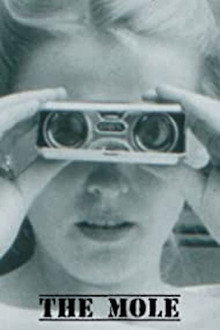
The Mole
An agent, sent to solve the secret of the lives of those who have a daily routine, wishes to be a part of them. After revealing the secret - that the whole world is a projected image - he enters this dream-reality.

A Kind of America
Tamás is a young, Budapest-based director of video clips and commercials who dreams of directing his...

Kész Átverés!

Katonák
Set in the 18th century, this tragicomedy depicts the debauchery of aristocratic officers condemned to celibacy, in the fate of a bourgeois girl reduced to a street slum. Marie, the beautiful young daughter of the decorative arts merchant Wesener, already has a fiancé, the poster merchant Stolzius, but Desportes, an officer in the French army, has his eye on her. At first, Wesener does everything he can to keep the beauty away from his daughter. But Marie convinces her father that the Baron's intentions are honourable. The father thinks it's his chance to marry the girl above his station. But his calculations are wrong.

Post Mortem
A post mortem photographer and a little girl confront ghosts in a haunted village after the First World War.

Dollybirds
The movie is set in the actual "Ki Mit Tud?" talent contest in 1962. In reality the contest in dance music category was won by an army brass band. "Omega" which later became one of the most successful Hungarian rock bands came out in the second place.

Hungarian Vagabond
A Hungarian historical movie that tells the story of the Hungarian ancestors, the seven leaders, who are looking for their new homeland in the last years of the 9th century. Before they leave their original home in Asia, they have a farewell party. They wake up with a severe hangover after consuming large quantities of kumis. The seven leaders wake up to find that their people have disappeared.

Pillangó
Zsigmond Móricz wrote his novel Butterfly in just a few days in 1924. Móricz tells the story of a mighty love that triumphs over adversity and is all-powerful in the language of ordinary people. The love of Zsuzsika and Jóska is presented through the "lightning and veil-soft" emotions of the director, László Vitézy's television adaptation. After The Legend of Hortobágy (Komorló) and The Sky Bird, this is the third film made by László Vitézy based on the writings of Zsigmond Móricz.

Kossuthkifli

The Mézga Family and the Magic Machine
The Mézga family and the magic machine is the fourth season of the wildly successful Mézga family series, which Pannónia Filmstúdió planned to produce in 2005. However, due to a lack of money, only two episodes of the series were made, which have been available online since May 2017.

Csudafilm
A disowned son of a Greek aristocrat arrives in Hungary in 1949 over his family’s communist beliefs and starts work in the Lágymányos tobacco factory, where he falls for Gizi Weiss and fathers their first child in 1953. Fifty years later, the now-destitute “Ratkó baby” is whisked from the Baross Square underpass to Crete by a legion of lawyers to claim his share of a legendary inheritance.
Epidemic
The film evokes the era of the 1831 cholera epidemic and the peasant uprising which followed it. The way of Doctor Balás, cholera commissioner, and district administrator Hunyor leads through the mountains of Zemplén and is lined by unburied corpses, peasants dying of the illness and of overdoses of bismuth, by the miserably starving population, the healthy digging mass-graves and by uncultivated lands.