Personal Info
Known For
Gender
Birthday
Place of Birth
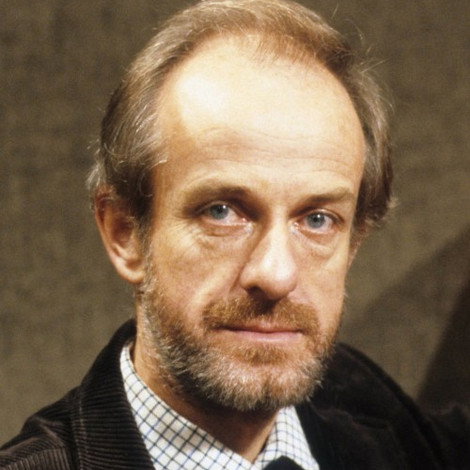
Julian Curry
Biography
Known for

Midsomer Murders
The peacefulness of the Midsomer community is shattered by violent crimes, suspects are placed under suspicion, and it is up to a veteran DCI and his young sergeant to calmly and diligently eliminate the innocent and ruthlessly pursue the guilty.

Play for Today
Play for Today is a British television anthology drama series, produced by the BBC and transmitted on BBC1 from 1970 to 1984. During the run, more than three hundred programmes, featuring original television plays, and adaptations of stage plays and novels, were transmitted. The individual episodes were between fifty and a hundred minutes in duration.

BBC Play of the Month
A BBC television anthology series featuring productions of classic and contemporary stage plays usually broadcast on BBC1. Each production featured a different work, often using prominent British stage actors in the leading roles. The series was transmitted from October 1965 to September 1983.


Sherlock Holmes
Sherlock Holmes, along with his friend Dr. Watson, uses his abilities to take on cases by private clients and those that the Scotland Yard are unable to solve.

Thirty-Minute Theatre
An anthology of short plays shown on BBC Television between 1965 and 1973, used in part at least as a training ground for new writers, on account of its short length, and which therefore attracted many writers who later became well known.

Inspector Morse
Inspector Morse is a detective drama based on Colin Dexter's series of Chief Inspector Morse novels. The series starred John Thaw as Chief Inspector Morse and Kevin Whately as Sergeant Lewis, as well as a large cast of notable actors and actresses.

Rumpole of the Bailey
Rumpole of the Bailey is a British television series created and written by the British writer and barrister John Mortimer. It stars Leo McKern as Horace Rumpole, an aging London barrister who defends any and all clients, and has been spun off into a series of short stories, novels, and radio programmes.

A Fine Romance
A Fine Romance is a British situation comedy starring husband-and-wife team Judi Dench and Michael Williams. Dench's sister was played by Susan Penhaligon. It was produced by London Weekend Television and written by Bob Larbey. It was first broadcast on 8 November 1981. It lasted for 26 episodes over four series; the final episode being broadcast on 17 February 1984. The series takes its name from a song in the 1936 film Swing Time, starring Fred Astaire and Ginger Rogers, which Dench recorded as the theme music. The series was nominated for nine BAFTA British Academy Television Awards and a winner of two, both for Dench's performance in 1982 and 1985.