Personal Info
Known For
Gender
Birthday
Place of Birth
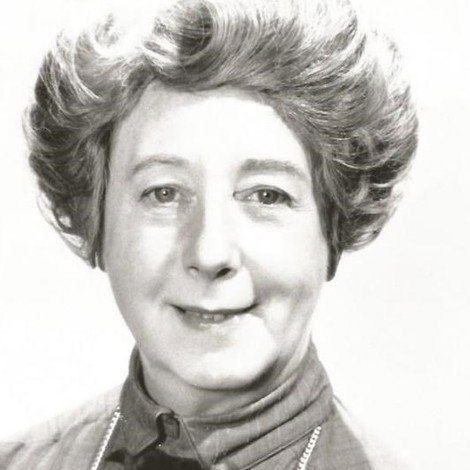
Mona Washbourne
Biography
Known for

Matinee Theater
Matinee Theater is an American anthology series that aired on NBC during the Golden Age of Television, from 1955 to 1958. The series, which ran daily in the afternoon, was frequently live. It was produced by Albert McCleery, Darrell Ross, George Cahan and Frank Price with executive producer George Lowther. McCleery had previously produced the live series Cameo Theatre which introduced to television the concept of theater-in-the-round, TV plays staged with minimal sets. Jim Buckley of the Pewter Plough Playhouse recalled: When Al McCleery got back to the States, he originated a most ambitious theatrical TV series for NBC called Matinee Theater: to televise five different stage plays per week live, airing around noon in order to promote color TV to the American housewife as she labored over her ironing. Al was the producer. He hired five directors and five art directors. Richard Bennett, one of our first early presidents of the Pewter Plough Corporation, was one of the directors and I was one of the art directors and, as soon as we were through televising one play, we had lunch and then met to plan next week’s show. That was over 50 years ago, and I’m trying to think; I believe the TV art director is his own set decorator —yes, of course! It had to be, since one of McCleery’s chief claims to favor with the producers was his elimination of the setting per se and simply decorating the scene with a minimum of props. It took a bit of ingenuity.

Play for Today
Play for Today is a British television anthology drama series, produced by the BBC and transmitted on BBC1 from 1970 to 1984. During the run, more than three hundred programmes, featuring original television plays, and adaptations of stage plays and novels, were transmitted. The individual episodes were between fifty and a hundred minutes in duration.

ITV Playhouse
ITV Playhouse is a British comedy-drama TV series that ran from 1967 to 1983, which featured contributions from playwrights such as Dennis Potter, Rhys Adrian and Alan Sharp. The series began in black and white, but was later shot in colour and was produced by various companies for the ITV network, a format that would inspire Dramarama. Actors appearing in the series included Leslie Anderson, Gwen Nelson, Ricky Alleyne, Pat Heywood, Michael Elphick, Ian Hendry, Edward Woodward, Margaret Lockwood, Jessie Matthews and Lloyd Peters.

Thirty-Minute Theatre
An anthology of short plays shown on BBC Television between 1965 and 1973, used in part at least as a training ground for new writers, on account of its short length, and which therefore attracted many writers who later became well known.


The Wonderful World of Disney
Walt Disney Productions has produced an anthology television series under several different titles since 1954. The original version of the series premiered on ABC, Wednesday night, October 27, 1954. The show, which was hosted by Walt Disney until his death and then from 1996 to 2002 by then-CEO Michael Eisner (with one-off hosts or no hosts during other periods) has since aired continually as either a weekly program or an irregular series of specials on several networks and streaming services, most recently on ABC and Disney+. The show is the second longest showing prime-time program on American television, behind its rival, Hallmark Hall of Fame. However, Hallmark Hall of Fame was a weekly program only during its first five seasons, while Disney remained a weekly program for more than forty years.

My Fair Lady
A snobbish phonetics professor agrees to a wager that he can take a flower girl and make her presentable in high society.

Centre Play
Anthology series of half hour plays produced in BBC's Television Centre's studios.

Brideshead Revisited
Agnostic Charles Ryder is seduced by the allure of the Flytes, a wealthy aristocratic family. Although he finds himself at odds with their strong Catholicism, his ties to the family deepen for the decades between the two world wars.

Casino Royale
Sir James Bond is called back out of retirement to stop SMERSH. In order to trick SMERSH, James thinks up the ultimate plan - that every agent will be named 'James Bond'. One of the Bonds, whose real name is Evelyn Tremble is sent to take on Le Chiffre in a game of baccarat, but all the Bonds get more than they can handle.

Shillingbury Tales
Shillingbury Tales is a 1980–81 British sitcom produced by Associated Television for ITV. Comprising a single feature length pilot and six one-hour episodes, the series deals with life in an idealised fictional English village and stars Robin Nedwell, Diane Keen, Nigel Lambert, Jack Douglas, John Le Mesurier, Bernard Cribbins and Trevor Howard. The series was written by Francis Essex and directed by Val Guest. Unusual for the time, it was shot entirely on location in the village of Aldbury in Hertfordshire on 16mm and consequently there was no laugh track. The show ended when ATV lost their licence to broadcast and their replacement Central declined to continue production.

Six Days of Justice
Six Days of Justice is a British television drama anthology series of single plays created by Thames Television and shown on ITV from 1972 to 1975, over four seasons of six episodes apiece.


Knight Errant Limited
Adam Knight is a young man who, having tried several jobs, decides to set up an agency, 'Knight Errant '59', to solve other people's problems - whatever they may be. There's plenty of scope and, assisted by former reporter Liz and idealistic young writer Peter, the latter-day Sir Lancelot is kept busy with a variety of curious and exciting cases. The series had two titles, Knight Errant '59 and Knight Errant Limited of which only two episodes exist out of the 75 produced.