Personal Info
Known For
Gender
Birthday
Place of Birth
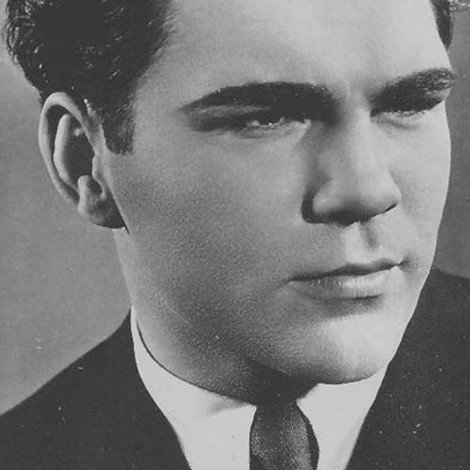
Max Schmeling
Biography
Known for

Bambi
The Bambi, often called the Bambi Award and stylised as BAMBI, is a German award presented annually by Hubert Burda Media to recognize excellence in international media and television to personalities in the media, arts, culture, sports, and other fields "with vision and creativity who affected and inspired the German public that year", both domestic and foreign. First held in 1948, it is the oldest media award in Germany. The trophy is named after Felix Salten's book Bambi, A Life in the Woods and its statuettes are in the shape of the novel's titular fawn character. They were originally made of porcelain until 1958, when the organizers switched to using gold, with the casting done by the art casting workshop of Ernst Strassacker in Süßen.

Dalli Dalli

Terra X History
The spectrum of topics ranges from political history with a focus on contemporary history (especially National Socialism and post-war history) to cultural history and social history. In addition, ZDF-History also regularly deals with pre-modern history, art and cultural history.

Heut' abend

Der große Preis

Stars in der Manege
V.I.P. Schaukel
V.I.P.-Schaukel is a 45 minute documentary-family-news-talk show starring Margret Dünser as Host. The series premiered on Sun May 09, 1971 on ZDF and Folge 37 - Final Show last aired on Fri May 09, 1980.
Der Sport-Spiegel
Zeichen der Zeit
Peter Alexander: Wir gratulieren
Peter Alexander präsentiert Spezialitäten

Not Afraid of Big Animals
Emil, a technical draftsman, is hardworking, always helpful, and somewhat shy. Because of these traits, he is often taken advantage of by those around him. Now Emil is set to inherit a supposedly large fortune. His landlady's brother wants to marry him off to one of his relatives. But soon panic and confusion set in. The inheritance consists of three full-grown lions.

Why We Fight: Prelude to War
Prelude to War was the first film of Frank Capra's Why We Fight propaganda film series, commissioned by the Pentagon and George C. Marshall. It was made to convince American troops of the necessity of combating the Axis Powers during World War II. This film examines the differences between democratic and fascist states.

The Zurich Engagement
Juliane Thomas is an ambitious but unemployed young writer. After breaking up with her lover she works at a dentist friend to make ends meet. One day she instantly falls in love with one of the patients (Jean Berner) and promptly writes a movie script about the encounter in which she projects her own fantasies about how things will turn out eventually. By coincidence this movie script is picked up by a film director who happens to be Berner's closest friend and from then on things become very complicated...