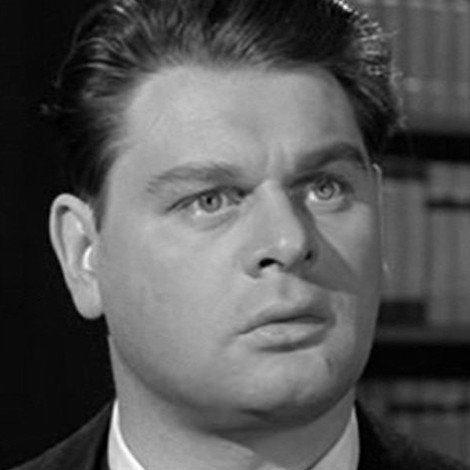
Personal Info
Known For
Gender
Birthday
Place of Birth
George Murcell
Biography
Known for

The Avengers
A quirky spy show of the adventures of eccentrically suave British Agent John Steed and his predominantly female partners. Jonathan Steed - an urbane, proper gentleman spy - teams with various assistants throughout the series' run, including Dr. David Keel, Cathy Gale, Emma Peel and Tara King, to repeatedly save the world from diabolical schemes plotted by equally diabolical evil-doers (among them robots and man-eating monsters).

The Saint
Simon Templar is The Saint, a handsome, sophisticated, debonair, modern-day Robin Hood who recovers ill-gotten wealth and redistributes it to those in need.
The Saint
Simon Templar is The Saint, a handsome, sophisticated, debonair, modern-day Robin Hood who recovers ill-gotten wealth and redistributes it to those in need.

The Professionals
The lives of Bodie and Doyle, top agents for Britain's CI5 (Criminal Intelligence 5), and their controller, George Cowley. The mandate of CI5 was to fight terrorism and similar high-profile crimes. Cowley, a hard ex-MI5 operative, hand-picked each of his men. Bodie is a cynical ex-SAS paratrooper and mercenary whose nature ran to controlled violence, while his partner, Doyle, comes to CI5 from the regular police force, and is more of an open minded liberal. Their relationship is often contentious, but they are the top men in their field, and the ones to whom Cowley always assigned to the toughest cases.

Thirty-Minute Theatre
An anthology of short plays shown on BBC Television between 1965 and 1973, used in part at least as a training ground for new writers, on account of its short length, and which therefore attracted many writers who later became well known.

No Hiding Place
No Hiding Place is a British television series that was produced at Wembley Studios by Associated-Rediffusion for the ITV network between 16 September 1959 and 22 June 1967. It was the sequel to the series Murder Bag and Crime Sheet, all starring Raymond Francis as Detective Superintendent, later Detective Chief Superintendent Tom Lockhart.

Theatre 625
Theatre 625 is a British television drama anthology series, produced by the BBC and transmitted on BBC2 from 1964 to 1968. It was one of the first regular programmes in the line-up of the channel, and the title referred to its production and transmission being in the higher-definition 625-line format, which only BBC2 used at the time.

The Adventures of Robin Hood
The legendary character Robin Hood and his band of merry men in Sherwood Forest and the surrounding vicinity. While some episodes dramatised the traditional Robin Hood tales, most episodes were original dramas created by the show's writers and producers.

Sunday Night Theatre
Sunday Night Theatre was a long-running series of televised live television plays screened by BBC Television from early 1950 until 1959. The productions for the first five years or so of the run were re-staged live the following Thursday, partly because of technical limitations in this era, and the theatrical basis of early television drama. Some of the earliest collaborations between Rudolph Cartier and Nigel Neale were produced for this series, including Arrow to the Heart and Nineteen Eighty-Four. The Sunday night drama slot was subsequently renamed The Sunday-Night Play which ran for four seasons between 1960 and 1963. ITV transmitted its own unrelated run of Sunday Night Theatre between 1971 and 1974.

Danger Man
Danger Man is a British television series which was broadcast between 1960 and 1962, and again between 1964 and 1968. The series featured Patrick McGoohan as secret agent John Drake. Ralph Smart created the programme and wrote many of the scripts. Danger Man was financed by Lew Grade's ITC Entertainment.

The Champions
After a plane carrying three Agents crashes in the Himalayas, they are rescued by an advanced civilisation secretly living in Tibet who grant them enhanced versions of the ordinary five senses, and intellectual and physical abilities.
The Champions
After a plane carrying three Agents crashes in the Himalayas, they are rescued by an advanced civilisation secretly living in Tibet who grant them enhanced versions of the ordinary five senses, and intellectual and physical abilities.