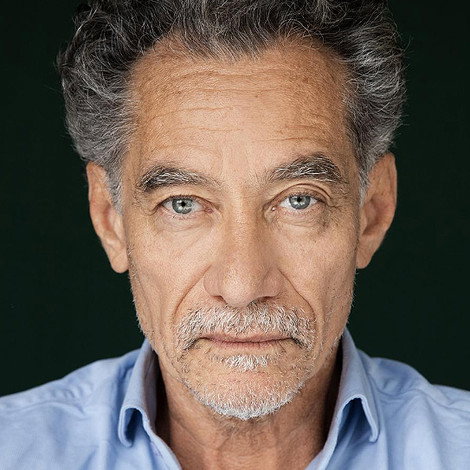
Personal Info
Known For
Gender
Birthday
Place of Birth
Chico Diaz
Biography
Known for

The Trapalhões
Os Trapalhões was a Brazilian comedy group and also a Brazilian television series created by Wilton Franco. Its members were Dedé Santana, Zacarias, Mussum and their leader Didi Mocó, that was played by Renato Aragão. The name Trapalhões is derived from the Portuguese verb atrapalhar, which means the opposite of helping, to do something the wrong way or to Those that confuse. The name is translated "Tramps" in English DVD subtitles. It was aired by Rede Globo from 1977 to 1999. On March 18, 1990, Zacarias died due to respiratory failure, but the group and the series didn't come to an end until July 29, 1994, when Mussum died due to an unsuccessful heart transplant.

A Grande Família
The daily lives of a typical Brazilian middle-class family, that are always very close and tries, in their way, to survive the financial and relationship difficulties.
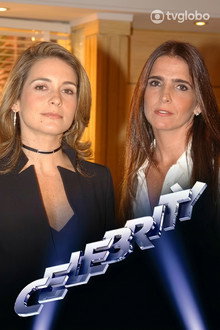
Celebrity
A successful businesswoman in the music industry sees her life fall apart after a young and mysterious woman starts work as her secretary. The scheming girl is totally obsessed by the famous businesswoman and she tries to steal everything from her, including her career.
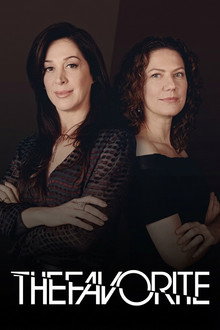
A Favorita
Flora and Donatella were two friends bonded by their love of music, but whose passion for the same man separated them forever. Donatella was Marcelo’s wife; Flora, his lover and murderer — a crime which cost her freedom and the custody of her daughter Lara, born out of that relationship and raised by Donatella. Now, history repeats itself, only this time their quarrel is not only over the same man but for Lara’s love. Torn between two mothers, the girl doesn’t know that Flora’s dirty, scheming ambition is not to draw her closer, but to keep her away from her longtime rival – plus snatch the inheritance of her former lover. The theme of rivalry — Flora’s bitter jealousy of the prettier and more talented Donatella permeates this provocative story and makes vengeance a ruleless game.

Força de um Desejo
Set in the 19th century, the novel tells the story of an impossible romance. Inácio, a young man from a traditional family, falls in love with Esther, the owner of the most famous brothel in the Court.
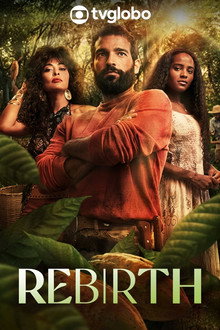
Rebirth
After making a pact with Jequitibá, José Inocêncio becomes a mythical figure, known as the most successful cocoa farmer in the region. While still young, he wins the heart of Maria Santa. Their intense passion results in four children: José Augusto, José Bento, José Venâncio, and the youngest, João Pedro, who never had the opportunity to know his mother, as she dies while giving birth to him. This tragedy fuels José Inocêncio’s anger, blaming João Pedro for the loss of his great love. Throughout their lives, indifference and resentment mark the relationship between the father and his youngest son. As if the past weren’t enough, years later, the arrival of the mysterious Mariana puts all these emotions to the test when both father and son fall in love with the same woman. This situation reawakens feelings that were either dormant or previously unknown to them.
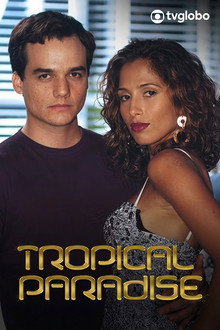
Tropical Paradise
The search for a successor provokes the beginning of a clash between two young and talented executives of his group: Daniel Bastos, a lad of simple origins and excellent character, who is not only handsome and charming, but also intelligent and skilled, and Olavo Novaes, an ambitious and unscrupulous man who is ready to fight for the position, at any cost. To fight against Olavo‘s treacherous plans, Daniel will have the help of the sweet and sensitive Paula, a young lady raised as an only child who founds, on the eve of her mother‘s death, that she is adopted and has a family. What Paula does not know is that she has an identical twin sister, the wicked Taís, who is as ambitious and unscrupulous as the man who becomes her main ally, Olavo Novaes. Antenor, for his part, decides on having an heir when he meets the headstrong and honest Lúcia, a woman who will make this cold businessman find true love is and a real reason to live.

Old River
A great love story, a family rivalry that spans generations: the telenovela narrates the love for the São Francisco River, which is revealed in the feelings between Maria Tereza and Santo.

Hilda Hurricane
After breaking off her engagement on her wedding day and going directly to a prostitution house, a young model becomes the city's most famous harlot, known as "Hilda Hurricane", in the 50's Brazil. She could do fine if it wasn't for Malthus, a young novice said to be a saint, for whom she falls in love. However, the boy is kept under the strict, severe doctrine of Father Nelson, a conservative priest intolerant even to every minor sin. Things start getting harder when Roberto, Malthus' old friend and a communist reporter (the actual author of the story), tries to interview Hilda and disclosure the real reasons behind her radical change of mind. In the meantime, the middle-classes are terrified by the "leftist threat" in Brazilian politics.

Mandala
Jocasta, an 18-year-old sociology student and daughter of communist activist Túlio Silveira, is actively involved in the country's political landscape. She is in love with Laio—her polar opposite—a disengaged, esoteric young man who lives off his wealthy father's allowance. A mystic, Laio makes no move without consulting his guru and friend Argemiro, whom he turns to upon learning of Jocasta's pregnancy. The cowrie shell reading reveals that his son is destined to kill him and enter into a romantic relationship with his mother. Terrified, Laio disappears with the child immediately after birth, aided by Argemiro—who loves Laio and loathes Jocasta. Twenty-five years later, Jocasta is a successful yet restless woman searching for her missing son. She is estranged from Laio, who has spent recent years expanding his father's fortune through involvement in underground gambling. On a highway, he encounters Oedipus, unaware that the young man is his son.

O Dono do Mundo
Felipe Barreto, a renowned plastic surgeon, makes a wager and gets involved with his employee's fiancée; from that moment on, the lives of those involved were never the same.

Brava Gente
Brava Gente was a television series aired by TV Globo in Brazil between 2000 and 2003, initially as a special year-end. The program was adapted from stories and national stories, and plays by famous playwrights, screenwriters and signed by a number represented by several actors and actresses. The genres of the stories varied each week with the style of each director or author. Brava Gente in the stories ranged from comedies and dramas. In all 53 episodes were shown, broadcast on Tuesday nights.