Personal Info
Known For
Gender
Birthday
Place of Birth
Maurício do Valle
Biography
Known for

The Trapalhões
Os Trapalhões was a Brazilian comedy group and also a Brazilian television series created by Wilton Franco. Its members were Dedé Santana, Zacarias, Mussum and their leader Didi Mocó, that was played by Renato Aragão. The name Trapalhões is derived from the Portuguese verb atrapalhar, which means the opposite of helping, to do something the wrong way or to Those that confuse. The name is translated "Tramps" in English DVD subtitles. It was aired by Rede Globo from 1977 to 1999. On March 18, 1990, Zacarias died due to respiratory failure, but the group and the series didn't come to an end until July 29, 1994, when Mussum died due to an unsuccessful heart transplant.

Roque Santeiro
In the tiny poor town of Asa Branca, in the middle of Brazilian Northeast, Roque Santeiro is worshiped as a saint. He was supposedly killed by a bandit, 18 years ago, trying to save the local church. After his disappearance, local leaderships such as landowner Sinhozinho Malta and mayor Florindo, took profit on that to control the humble population. They even make up a widow, Porcina, who should have married Roque secretly before his death. What they don't expect is that Roque is alive, and he's back to, allegedly, "save his people". Now Malta, Florindo, Porcina, and others must hold him down and explain the "truth" to their commoners, in a desperate attempt to save their own bottoms. Meanwhile, mysterious facts surround Asa Branca, such as a Werewolf, a film crew who are trying to shoot a movie about Roque's story, and violent murderers.

Jerônimo, o Herói do Sertão

A História de Ana Raio e Zé Trovão

Mad Love
The young and rich Patricia, daughter of Ambassador André Dumont's first marriage, is in love with and reciprocated by Luiz Carlos, a poor boy, son of the family's maid, Isolda. Whoever doesn't like to see her with the maid's son is her stepmother, Renata Dumont, André's wife. Renata is an ambitious woman who hides her humble origins and a secret from the past that unites her with Isolda. Career, she married the diplomat André, from a traditional family, with whom she had a son, Lipe.

Kananga do Japão

Meu Pedacinho de Chão
Colonel Epaminondas is a retrograde and authoritarian man, who commands and dismantles the region. He declares war on Pedro Galvão, his main rival, when he donates part of his land – purchased from the colonel – for the construction of a church and a school. The arrival of professor Juliana, right at the beginning of the plot, changes the lives of the residents of the small village. Juliana takes over the school and ends up arousing the interest of Fernando, Epaminondas' son. Oblivious to the fights that drive the story are Pituca (Patrí and Serelepe (Aires Pinto). The friendship between the two children, however, does not please the colonel, who is always fighting with his daughter. 'Meu Pedacinho de Chão' was co-produced and shown simultaneously by Globo and TV Cultura in São Paulo.
O Tempo e o Vento

Cabocla
The soap opera critiques the power struggles among rural politicians in the 1920s. Joaquim is shocked when a doctor reveals that his son, Luís Jerônimo, has a lung lesion. To recover his health, the young man leaves Rio de Janeiro for Colonel Boanerges's farm in Vila da Mata, Espírito Santo. There, he meets Zuca, and the two fall in love. Zuca is the colonel's goddaughter and the fiancée of the fearless cowboy Tobias, who refuses to accept the possibility of losing her to the outsider. Zuca and Luís Jerônimo face numerous obstacles in pursuing their love. Their romance is also threatened by the arrival of Pepa in Vila da Mata; having been in love with Luís Jerônimo back when he lived in Rio, she tries by every means possible to drive the couple apart.

Feijão Maravilha
Romantic and dreamy, Eliana works at a five-star hotel and becomes involved with unrequited love, a bumbling gang, and a complex police story.

Pé de Vento
Edmar, nicknamed "Pé de Vento" (Wind Foot), comes with his family from Muzambinho, Minas Gerais, to São Paulo to try his luck professionally. Interested in running, he starts training at a club under the guidance of Alfredo, a veteran disillusioned with the sport, who only has hopes for the athlete. Their shared dream is to win the São Silvestre Race. At the club, Edmar meets Cristiane, a wealthy young woman who falls in love with him and despises the spoiled Itamar. However, Pé falls in love with the humble nurse Terezinha, granddaughter of the wise Mrs. Noca.
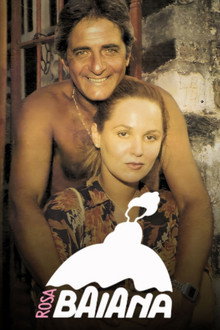
Rosa Baiana
Rosa Baiana is a strong and courageous woman, the companion of Edmundo Lua Nova, who abandoned her with seven children to travel the world. Her children, Agenor, Ivan, Bráulio, Walter, Orestes, Cláudia, and Edinho, ended up connecting their lives to oil, working in the oil fields of Bahia, without, however, detaching themselves from their mother, the ultimate authority and final word in the family. Rosa imposes her personal worldview on everyone. The children don't dare contradict her, even when their lives conflict with their mother's standards. Until the day Edmundo Lua Nova returns home after twenty years away.

Obrigado, Doutor

O Tempo e o Vento
It tells the story of the Camabará family for many generations, which were fundamental to the social and political formation of the state of Rio Grande do Sul. The stories are remembered by Dona Bibiana, who remembers the life of her grandmother Ana, her husband, the Captain Rodrigo, his son Bolivar and his daughter-in-law Luzia.

Gabriela
In 1925, Gabriela, a poor, uneducated, yet charming woman becomes cook, mistress, and then wife of Nacib, a bar owner in Ilhéus, a small Brazilian coastal town run by the local colonels.