Personal Info
Known For
Gender
Birthday
Place of Birth
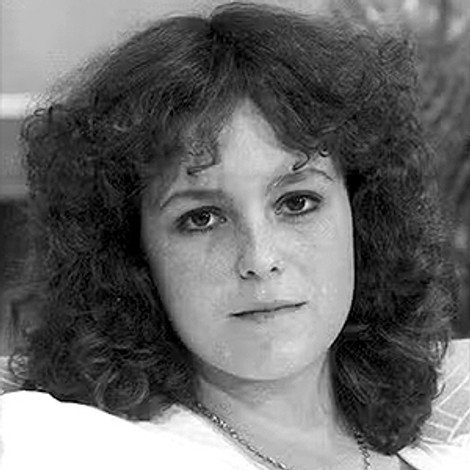
Denise Dumont
Biography
Known for

The Trapalhões
Os Trapalhões was a Brazilian comedy group and also a Brazilian television series created by Wilton Franco. Its members were Dedé Santana, Zacarias, Mussum and their leader Didi Mocó, that was played by Renato Aragão. The name Trapalhões is derived from the Portuguese verb atrapalhar, which means the opposite of helping, to do something the wrong way or to Those that confuse. The name is translated "Tramps" in English DVD subtitles. It was aired by Rede Globo from 1977 to 1999. On March 18, 1990, Zacarias died due to respiratory failure, but the group and the series didn't come to an end until July 29, 1994, when Mussum died due to an unsuccessful heart transplant.

The Equalizer
Robert McCall is a former agent of a secret government agency who is now running his own private crime fighting operation where he fashions himself as "The Equalizer." It is a service for victims of the system who have exhausted all possible means of seeking justice and have nowhere to go. McCall promises to even out the odds for them.

Dance with Me
Quinzinho and João Victor are identical twins separated at birth, unaware of each other's existence. The brothers eventually draw closer, guided by their instincts.

O Semideus

Marron Glacé
To avenge his father's death, Otávio wants to take over a party catering business called "Marron Glacé," but ends up falling in love with Vanessa, the daughter of the current owner.

Corpo Santo

Marina
Marina is raised by her father on an island after her mother's death. As a teenager, she moves to Rio de Janeiro to study and live with her godparents, where she ends up falling in love with Marcelo.
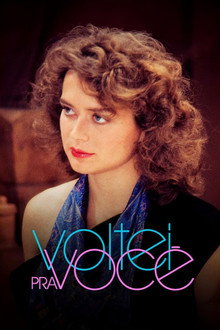
Voltei pra Você
The mining town of São João Del Rei became the setting for a romance set amidst discussions about land division.

Gina
Gina attracts attention and envy. Years later, her life is shaken by the return of an old love and she discovers some schemes orchestrated by her best friend.

The Cariocas
"The Cariocas", a series in ten stand-alone episodes, tells the story of ten modern-day women against the beautiful backdrop of Rio de Janeiro and its stunning urban landscapes. Our protagonists are uninhibited, adulterous, vindictive, suicidal, envious, brides, betrayed, deluded. Women with distinct beauty and quaint peculiarities, each one has a particular way of life.

Kiss of the Spider Woman
The story of two radically different men thrown together in a Latin American prison cell. One is Valentin, a journalist being tortured for his political beliefs. The other is Molina, a gay window-dresser who fills their lonely nights by spinning romantic fantasies drawn from memories of old movies.

Tim Maia: Vale o Que Vier
The story of Tim Maia, from his impoverished childhood to the peak of his career, detailing the singer's turbulent lifestyle and strong personality; he died in 1998.

Quem Ama Não Mata
The miniseries addresses the difficulties in romantic relationships through the story of five middle-class couples with different views on marriage, love and fidelity. The protagonists, housewife Alice (Marília Pêra) and dentist Jorge (Cláudio Marzo), married for eight years, seem like a perfect couple. However, the union is in crisis because they are unable to have a child. Jorge discovers that he is sterile and, disappointed, does not reveal the fact to Alice, who suffers from not being able to get pregnant. The relationship becomes increasingly difficult due to the lack of dialogue and they become violent towards each other. A murder connects the plots: in the first chapter, the viewer learns that there was a crime, but does not know who the victim is: Jorge or Alice. The mystery is only revealed in the last chapter, when it is discovered that Jorge is the murderer.

Radio Days
The Narrator tells us how the radio influenced his childhood in the days before TV. In the New York City of the late 1930s to the New Year's Eve 1944, this coming-of-age tale mixes the narrator's experiences with contemporary anecdotes and urban legends of the radio stars.
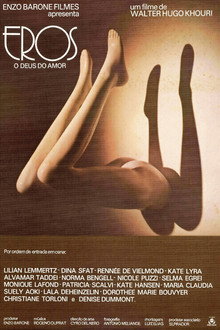
Eros, the God of Love
A man explores the process of formation of sexuality and is looking for a woman that does not exist.