
Personal Info
Known For
Gender
Birthday
Place of Birth
Diana Coupland
Biography
Known for
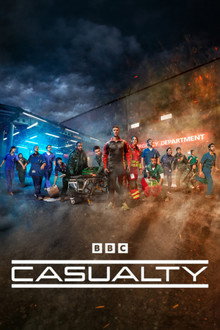
Casualty
Drama series about the staff and patients at Holby City Hospital's emergency department, charting the ups and downs in their personal and professional lives.

Z-Cars
Z-Cars or Z Cars is a British television drama series centred on the work of mobile uniformed police in the fictional town of Newtown, based on Kirkby, Merseyside. Produced by the BBC, it debuted in January 1962 and ran until September 1978.

The Wednesday Play
An anthology series of television plays which aired on BBC1 from October 1964 to May 1970. The plays were usually written for television, although adaptations from other sources also featured.

BBC Play of the Month
A BBC television anthology series featuring productions of classic and contemporary stage plays usually broadcast on BBC1. Each production featured a different work, often using prominent British stage actors in the leading roles. The series was transmitted from October 1965 to September 1983.

Thirty-Minute Theatre
An anthology of short plays shown on BBC Television between 1965 and 1973, used in part at least as a training ground for new writers, on account of its short length, and which therefore attracted many writers who later became well known.
Thirty-Minute Theatre
An anthology of short plays shown on BBC Television between 1965 and 1973, used in part at least as a training ground for new writers, on account of its short length, and which therefore attracted many writers who later became well known.

No Hiding Place
No Hiding Place is a British television series that was produced at Wembley Studios by Associated-Rediffusion for the ITV network between 16 September 1959 and 22 June 1967. It was the sequel to the series Murder Bag and Crime Sheet, all starring Raymond Francis as Detective Superintendent, later Detective Chief Superintendent Tom Lockhart.

Theatre 625
Theatre 625 is a British television drama anthology series, produced by the BBC and transmitted on BBC2 from 1964 to 1968. It was one of the first regular programmes in the line-up of the channel, and the title referred to its production and transmission being in the higher-definition 625-line format, which only BBC2 used at the time.

Dr. No
Agent 007 battles mysterious Dr. No, a scientific genius bent on destroying the U.S. space program. As the countdown to disaster begins, Bond must go to Jamaica, where he encounters beautiful Honey Ryder, to confront a megalomaniacal villain in his massive island headquarters.

The Odd Man
The first of a trilogy of police procedurals produced in the 1960s by Granada TV, linked by the presence of pompous but increasingly genial police Chief Inspector Charles Rose, The Odd Man initially dealt with the investigations of theatrical-agent-cum-detective Steve Gardiner, and his encounters with the police in the form of Chief Inspector Gordon and DS Swift. By season three, Rose takes Gardiner's place.

Story Parade
Story Parade specialized in adaptations of modern novels. It was broadcast on June 5, 1964 and repeated on August 28, 1964. The teleplay was by Terry Nation (who invented "Blake's 7" and the Daleks in Dr. Who), and Elijah Baley was played by the late Peter Cushing. It also starred John Carson John Carson as R. Daneel Olivaw and Kenneth J. Warren. The master tapes of the program were erased, however a few clips from the production have turned up in various documentaries about Isaac Asimov's work.

Triangle
Triangle was a BBC Television soap opera in the early 1980s, set aboard a North Sea ferry which sailed from Felixstowe to Gothenburg and Gothenburg to Amsterdam. A third imaginary leg existed between Amsterdam and Felixstowe to justify the programme title, but this was not operated by the ferry company. The show ran for three series before being cancelled, but is still generally remembered as "some of the most mockable British television ever produced". The scripts involved clichéd relationships and stilted dialogue, making the show the butt of several jokes - particularly on Terry Wogan's morning Radio 2 programme - which caused some embarrassment to the BBC. In 1992, the BBC screened TV Hell, an evening of programming devoted to the worst television had to offer, and the first episode of Triangle was broadcast as part of the line-up. The ferry used in the first series was the Tor Line's MS Tor Scandinavia. In the second and third series this was replaced by the DFDS vessel Dana Anglia probably because she had a less intensive schedule and the longer time she spent in port made on-board filming easier.

One Foot in the Grave
One Foot in the Grave is a BBC television sitcom series. The series features the exploits of Victor Meldrew and his long-suffering wife, Margaret. The programmes invariably deal with Meldrew's battle against the problems he creates for himself. Living in a typical household in an unnamed English suburb, Victor takes involuntary early retirement. His various efforts to keep himself busy, while encountering various misfortunes and misunderstandings are the themes of the sitcom. Despite its traditional production, the series supplants its domestic sitcom setting with elements of black humour and surrealism.

Please Sir!
A hapless but caring teacher tries to control his class of unruly kids. The teacher sees much good and potential in his pupils, much to the dismay of his fellow teachers who have lost hope in these kids.

The Main Chance
The Main Chance was a British television series which first aired on ITV between 1969,1970,1972 and 1975. A drama, it depicts the sudden transformation in the life of solicitor David Main who relocates from London to Leeds.