
Personal Info
Known For
Gender
Birthday
Place of Birth
Norma Blum
Biography
Known for

Young Hearts
Malhação is a Brazilian television series for the teenage audience. The soap started in 1995, and was set in a fictional Gym Club called Malhação on Barra da Tijuca, Rio de Janeiro. Through the years the location varied slightly. Although the name of the soap remains the same, it is now set in the Múltipla Escolha High School.

The Trapalhões
Os Trapalhões was a Brazilian comedy group and also a Brazilian television series created by Wilton Franco. Its members were Dedé Santana, Zacarias, Mussum and their leader Didi Mocó, that was played by Renato Aragão. The name Trapalhões is derived from the Portuguese verb atrapalhar, which means the opposite of helping, to do something the wrong way or to Those that confuse. The name is translated "Tramps" in English DVD subtitles. It was aired by Rede Globo from 1977 to 1999. On March 18, 1990, Zacarias died due to respiratory failure, but the group and the series didn't come to an end until July 29, 1994, when Mussum died due to an unsuccessful heart transplant.

Celebrity
A successful businesswoman in the music industry sees her life fall apart after a young and mysterious woman starts work as her secretary. The scheming girl is totally obsessed by the famous businesswoman and she tries to steal everything from her, including her career.

Carrossel
Carrossel is a children's telenovela created by Abel Santa Cruz and written by Íris Abravanel, originally transmitted on SBT from May 21, 2012 to present. It is a Brazilian remake of the Mexican telenovela Carrusel, which in turn had been inspired by the Argentinean telenovela Jacinta Pichimahuida, la Maestra que no se Olvida. In a short time the display was a telenovela phenomenon of hearing canal causing quite successful among the children public yielding several CDs, DVDs, toys and other products in less than a year. including we have made several spin-offs based on it, including a cartoon series and television sitcom.

Irrational Heart
Leo's envy of his brother Pedro will cause much pain and suffering, beginning with the death of Luciana, Pedro's fiancée.
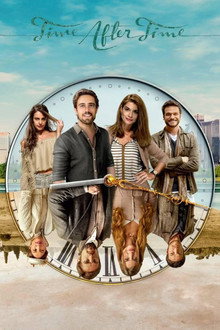
Time After Time
Livia and Felipe are in a forbidden love story doomed to end tragically. A century later, they both have a new chance to make their love real again. “Time After Time” is an innovative romance set in two different eras in which characters hold the opportunity to make up for their mistakes, come to terms with the past and write themselves another story.

Precious Pearl
In 1934 two supposed brothers survived an avalanche in the Himalayas: the millionaire Franz Hauser (Bruno Gagliasso), who is saved by Buddhist monks, and Manfred (Carmo Dalla Vecchia), rescued by a team of climbers. Manfred returns to Brazil with a terrible secret: he sabotaged Franz’s equipment in order to take his place in the family business. After an exhaustive search, Ernest Hauser gives his son up for dead and appoints his bastard son as the director of the Hauser Group.

Isaura: Slave Girl
Set in 19th-century Brazil during the waning years of slavery, Escrava Isaura tells the story of Isaura, a white-skinned enslaved woman raised with the manners and education of a noble lady. Though treated with affection by her mistress, Isaura remains legally enslaved and becomes the object of obsessive desire by Leôncio Almeida, the cruel heir to the plantation. After the death of her protector, Isaura falls under Leôncio’s control. Despite his attempts to seduce and dominate her, she resists, determined to preserve her dignity and freedom. Her father, Miguel, helps her escape to Recife, where she adopts a new identity and meets Álvaro, a wealthy and principled abolitionist who falls in love with her. Leôncio eventually tracks her down, leading to dramatic confrontations. In the end, Álvaro rescues Isaura by purchasing Leôncio’s debts, securing her freedom and affirming the story’s central themes of justice, love, and resistance against oppression.

Little Missy
In 1886, in the small town of Araruna, Little Missy rejects the actions of her father—the slave-owning Colonel Ferreira—alongside Rodolfo, an active abolitionist republican with whom she falls in love.

Cortina de Vidro

Cat's Cradle
Imagine a strong and tender hearted woman, a confused man and a villain capable of everything to get money. We have the perfect love triangle to a classic love story.

Planeta dos Homens

Elas por Elas
Seven high school friends reunite after 20 years. Memories of the past and coincidences of the present reveal the secrets and affections that bind the women and their families.

Floribella
Floribella is a Brazilian children's musical telenovela produced by RGB Entertainment and broadcast by Band from April 4, 2005, to August 12, 2006. It is an adaptation of the Argentine telenovela Floricienta (2004), created by Cris Morena. Adapted by Patrícia Moretzsohn and Jaqueline Vargas, with general direction by Elisabetta Zenatti, the telenovela stars Juliana Silveira, Roger Gobeth, Maria Carolina Ribeiro, Mário Frias, Suzy Rêgo, Daniel Ávila, and Cássia Linhares. The story follows Maria Flor, a kind and optimistic young woman who becomes the nanny of the wealthy Fritzenwalden family's five orphaned children. With her cheerful personality and love of music, Flor transforms the household while falling in love with Frederico Fritzenwalden. As they face jealousy, family disputes, and the schemes of the ambitious Delfina, Flor uncovers secrets about her past and learns that courage, friendship, and hope can overcome even the greatest challenges.