Personal Info
Known For
Gender
Birthday
Place of Birth
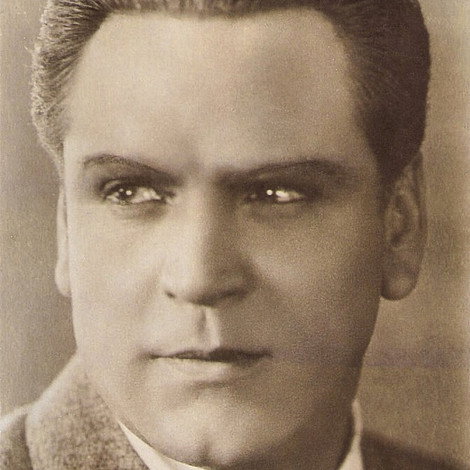
Gabriel Gabrio
Biography
Known for

The Devil's Envoys
At the end of the 15th century, a man and a woman, posing as traveling minstrels, are sent by the Devil to a castle to seduce its inhabitants.

Les Misérables
In 19th century France, Jean Valjean, a man imprisoned for stealing bread, must flee a relentless policeman named Javert. The pursuit consumes both men's lives, and soon Valjean finds himself in the midst of the student revolutions in France.

Pépé le Moko
Pépé le Moko, one of France's most wanted criminals, hides out in the Casbah section of Algiers. He knows police will be waiting for him if he tries to leave the city. When Pépé meets Gaby, a gorgeous woman from Paris who is lost in the Casbah, he falls for her.

Wooden Crosses
The young and patriotic student Demachy joins the French army in 1914 to defend his country. But he and his comrades soon experience the terrifying, endless trench war in Champagne, where more and more wooden crosses have to be erected for this cannon fodder.

Lucrezia Borgia
In 15th-century Rome, Cesare Borgia uses his sister Lucrezia as a political pawn, marrying her off to various noblemen to help unite Italy.


The Letter

The Joker
Georg Jacoby’s Jokeren is a light-hearted entertainment picture set during the carnival in Nice, a romantic comedy with a touch of melodrama. A young artist, fatally injured in a car accident, foolishly entrusts a batch of compromising love letters to Borwick, a crooked and unscrupulous lawyer, instructing him to destroy them. Instead, Borwick proceeds to blackmail the woman who sent the letters, Lady Cecilie Powder, married to the straight-arrow Sir Herbert Powder. Lady Cecilie gets help from her spunky younger sister Gill. In turn, she draws in Peter Carstairs, a debonair adventurer known to all as “the Joker” – the card that trumps all others. When the Joker repeatedly foils Borwick’s schemes, the crooked lawyer ups the ante, trying to incriminate his adversary Carstairs and expanding his demands to include marriage to Gill. But as the characters converge at yet another lavish carnival celebration party, it becomes clear that one card does indeed trump all the others: the Joker!

Wine Cellars
Wine Cellars itself is a Spanish-French co-production. He shot the film in the Paris studios and also in Spain, Andalusia and Seville. According to the critics, his story of love, honour, revenge, bulls and vineyards masterfully captures the spirit of this region, the sun beating down on the parched earth, life on the farms and vineyards and the celebrations coloured by the famous flamenco dance. Wine Cellars was originally a silent film and its soundtrack was only added later.

Deuxième bureau contre kommandantur
In 1917, in a small village in the North, Abbe Gaillard is suspected by the Germans of facilitating the escape of French and Belgian soldiers. A false alibi makes him innocent and he can thus continue his mission, thanks to the devotion of an Alsatian who, in enemy uniform, obscurely serves his country.

Antoinette Sabrier
Adapted from a play by Romain Coolus, whose work Dulac had covered as a theater critic at the turn of the century, this atmospheric and socially inquisitive film tells the tale of an independent, sexually liberated woman (Eve Francis) who is torn between her husband (Gabriel Gabrio) and her lover (Paul Guide). Controversial at the time of its release, Antoinette Sabrier finds Dulac using her bold sense of visual rhythm to achieve a complex portrait of a woman trapped in an unhappy marriage and a nuanced investigation into human intimacy, with her characters’ emotions expressed through then-innovative cinematic techniques such as slow motion and associative montage.

A Beautiful Woman
Father-and-son lion tamers, Rabbas and Léo share a mistress - Rosita, the " lovely bitch " of the film's title. She is as wild as their lionesses and, in a single night the father is injured and the son attempts suicide. Only when Rosita leaves the circus can things get back to normal.

Le Juif Errant
Guilty of insulting Christ Ahasverus became forever eternity the wandering Jew. On 13 February 1682, during a night of pogrom in the Warsaw ghetto a Frenchman married to a Polish Jew is assassinated by members of a secret society.

Fecundity
