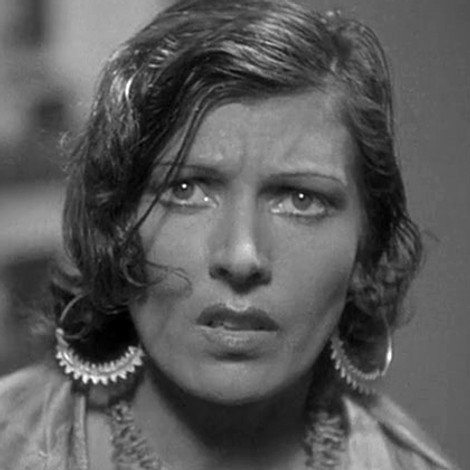
Personal Info
Known For
Gender
Birthday
Place of Birth
Line Noro
Biography
Known for

Opération Jericho

Ramuntcho
Ramuntcho is a young man who has fallen in with a gang of smugglers, led by Itchoua, who carry their contraband across the border into Spain. He is in love with Gracieuse whose mother, Dolorès, bitterly dislikes Ramuntcho because he was born an illegitimate child. His smuggling activities force him to join the army and he is sent to Saigon and, because of her mother's desire to marry her off to someone else, Gracieuse joins a convent.

Pépé le Moko
Pépé le Moko, one of France's most wanted criminals, hides out in the Casbah section of Algiers. He knows police will be waiting for him if he tries to leave the city. When Pépé meets Gaby, a gorgeous woman from Paris who is lost in the Casbah, he falls for her.

Vautrin the Thief
A famous convict Jacques Collin, alias Trompe la mort, or abbot Carlos Herrera, also called Vautrin, escapes from prison. Chance makes him meet Lucien de Rubempré, an impetuous and eternal lover who, when he is dismissed, collapses. Moved by this fragility, he takes him under his wing, and will do everything possible to ensure that his creature reaches happiness, even if it means imagining the worst shenanigans and other scams, with the help of a band of clever villains.


We Are All Murderers
Originally titled Nous Sommes Tout des Assassins, We Are All Murderers was directed by Andre Cayette, a former lawyer who detested France's execution system. Charles Spaak's screenplay makes no attempt to launder the four principal characters (Marcel Mouloudji, Raymond Pellegrin, Antoinine Balpetre, Julien Verdeir): never mind the motivations, these are all hardened murderers. Still, the film condemns the sadistic ritual through which these four men are brought to the guillotine. In France, the policy is to never tell the condemned man when the execution will occur--and then to show up without warning and drag the victim kicking and screaming to his doom, without any opportunity to make peace with himself or his Maker. By the end of this harrowing film, the audience feels as dehumanized as the four "protagonists." We Are All Murderers was roundly roasted by the French law enforcement establishment, but it won a special jury prize at the 1952 Cannes Film Festival.

Ceux du rivage
In the oyster and fishing town of Arcachon, one man doesn't want his adopted son to get married to the daughter of his rival, and he suspects a dark underlying secret.

Before the Deluge
The title of this French "reality" drama, which translates to Before the Deluge, is a play on Louis XVI's famous prognostication, "Apres moi, le deluge." Set in 1950, the film concentrates on five Parisian adolescents. Certain that the next war will herald the apocalypse, the youngster make plans to run off to a desert island and set up a new society. This, however, will require money, which is why the boys decide to pull off a "necessary" robbery. Idealism collapses in the face of cold reality, as the five youths suffer from the consequences of their actions. Avant le Deluge was one of a group of films cowritten by director Andre Cayatte and Charles Spaak which endeavored to explore the touchy social issues of the day: others in the Cayatte-Spaak canon include the euthanasia-themed Justice est Faite and the capital-punishment tract Nous sommes tous des assassins.

La Grande Volière
A young pilot, Martin, applies for the Ecole Militaire de Salon. He is accused of having caused the accident of one of his bosses, his career is then threatened.

The Well-Digger's Daughter
A rural maiden's two suitors go off to war, leaving her pregnant.

Inside a Girls' Dormitory
In a little town with a renowned college a female student is found after she was hogtied and strangled to death. Inspector Marco is assigned to catch the murderer.

The Count of Monte Cristo Part 1 - The Prisoner of Kastell
Edmond Dantes is falsely accused by those jealous of his good fortune, and is sentenced to spend the rest of his life in the notorious island prison, Chateau d'If. While imprisoned, he meets the Abbe Faria, a fellow prisoner whom everyone believes to be mad. The Abbe tells Edmond of a fantastic treasure hidden away on a tiny island, that only he knows the location of. After many years in prison, the old Abbe dies, and Edmond escapes disguised as the dead body. Now free, Edmond must find the treasure the Abbe told him of, so he can use the new-found wealth to exact revenge on those who have wronged him.

Le Petit Jacques
An honest worker is unjustly accused of murder. The culprit promises him to give his son a good education if he allows himself to be condemned.

Pastoral Symphony
On Christmas Eve, Swiss minister Jean Martens takes in a blind, half-crippled orphan and brings her up among his own four children. But Gertrude grows into a woman and Jean gradually falls in love with her without admitting it to himself. On the contrary, he lulls his conscience by interpreting the Scriptures to his advantage. But neither his wife nor his oldest son are fooled. Following a long-delayed operation, Gertrude recovers her sight but she is not long to find out that sin has corrupted the soul of her benefactor.

It Happened at the Inn
An old woman living in an inn is killed and her family members seem like the likely culprits.