
Personal Info
Known For
Gender
Birthday
Place of Birth
Menashe Noy
Known for
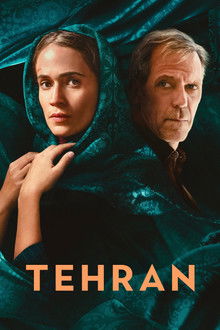
Tehran
Tamar is a Mossad hacker-agent who infiltrates Tehran under a false identity to help destroy Iran's nuclear reactor. But when her mission fails, Tamar must plan an operation that will place everyone dear to her in jeopardy.
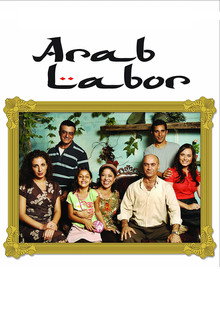
Arab Labor
Amjad is an Arab-Israeli journalist whose problems with cultural identity drive himself and all around him crazy especially his wife, Bushra.
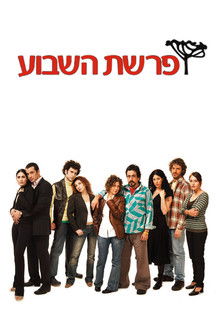
On Any Saturday
"Parashat HaShavua" follows four families through a dramatic year of their lives. Love, hate, friendships and secrets mixes up when the families connect.

Don't Ask
Shay Stern sets out on journeys across the country, meeting interesting people and continuing to not give a damn about anyone in his quest for the most fascinating individuals in Israel.
Chamber Quintet
Hahamishia Hakamerit was a weekly Israeli satirical sketch comedy television program created by Asaf Tzipor, who was also the main writer of the show, and Eitan Tzur, who directed the entire run of the show. Hahamishia Hakamerit was broadcast on Israeli Channel 2 and Israeli Channel 1 between the years 1993-1997. Later on, reruns of the show were broadcast on the cable channel Bip. The show's often surreal skits were characterized by a satirical point of view which did not spare the audience sensitive subjects such as politics, national security, the Holocaust and sex. Another characteristic of the show's sketches was that occasionally they had an unclear point or punch line. Following the success of the show, similar sketch comedy programs were produced on Israeli television. Unlike Hahamishia Hakamerit's humor, these subsequent shows followed a line much closer to the consensus.
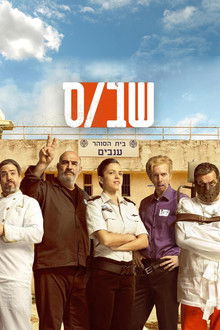
Shabas
A sketch program that takes place in Grape Prison and brings the experiences of the guards, prisoners, and visitors.

Big Bad Wolves
The twisted paths of three very different men brutally collide due to a chain of unspeakable murders: a grieving father who has been doomed to seek vengeance and a police detective who boldly crosses the narrow boundary between law and crime meet a religion teacher suspected of being the murderer.
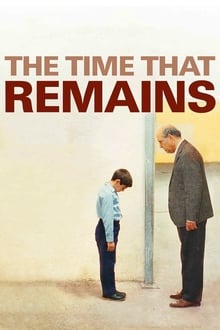
The Time That Remains
An examination of the creation of the state of Israel in 1948 through to the present day. A semi-biographic film, in four chapters, about a family spanning from 1948 until recent times. Combined with intimate memories of each member, the film attempts to portray the daily life of those Palestinians who remained in their land and were labelled "Israeli-Arabs," living as a minority in their own homeland.
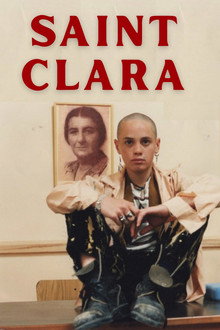
Saint Clara
The year is 1999 and the storyline is actually a number of sub-plots all revolving around the 13-year old Clara, a girl that can predict the future and has telekinetic powers. The sub-plots include a boy in her class who has a crush on her, his family, her family and her principal that keeps talking French for some strange reason.
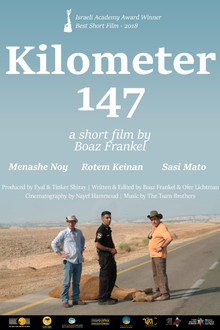
Kilometer 147
A camel's body lies in the middle of a desert road, exactly on the 147th kilometer, on the border between two settlements. None of them agrees to take responsibility for it.
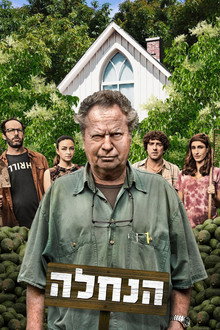
The Property

Working Woman
While her husband struggles to keep his restaurant in business, a mother of three lands a job as an assistant to a powerful, but sexually harrassive realtor and brings herself to fight back.
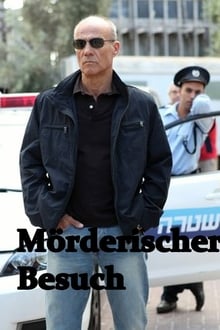
Mörderischer Besuch

The Cameric Five in Green
Hahamishia Hakamerit (Hebrew: החמישייה הקאמרית, The Kameri Quintet) was a weekly Israeli satirical sketch comedy television program created by Asaf Tzipor, who was also the main writer of the show, and Eitan Tzur, who directed the entire run of the show. Hahamishia Hakamerit was broadcast on Israeli Channel 2 and Channel 1 between the years 1993-1997. Later on, reruns of the show were broadcast on the cable channel Bip (channel). The show's often surreal skits were characterized by a satirical point of view which did not spare the audience sensitive subjects such as politics, national security, the Holocaust and sex.
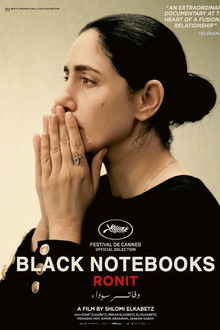
Black Notebooks
With this two-part feature documentary, Shlomi Elkabetz shares a poignant love letter to his sister, the late actress and director Ronit Elkabetz, and delivers a rare cinematic experience.