Personal Info
Known For
Gender
Birthday
Place of Birth
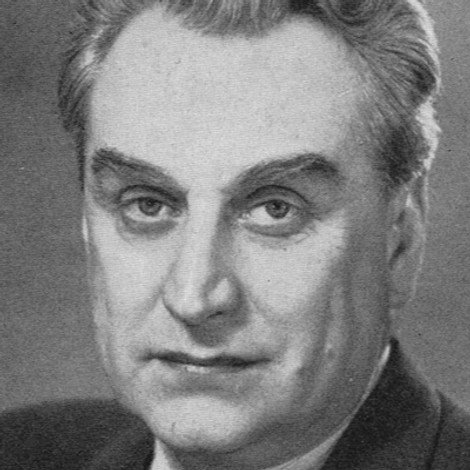
Grigori Aleksandrov
Biography
Known for

Battleship Potemkin
In the midst of the Russian Revolution of 1905, the crew of the battleship Potemkin revolt against the brutal, tyrannical regime of the vessel's officers. The resulting street demonstration in Odessa brings on a police massacre.

Strike
Just before the 1905 Bolshevik Revolution, factory workers strike against their oppressive factory bosses. When a worker is accused of stealing a piece of machinery, he commits suicide, and his colleagues revolt against the overarching Czarist regime. As the strike drags on and government officials grow increasingly desperate to end it, their methods of dealing with the rebellious workers become more and more aggressive.

Seeds of Freedom
Archive footage from Potemkin (1925), with English dialogue dubbed in by American actors, is combined with new footage to tie together the brave stand of Odessa Russian guerrilla bands of the 1940's against German forces with the similar situation of 1905 when Odessa citizens aided in the revolt against the Czar as depicted in Eisenstein's classic Potemkin (1925).

I Don't Want to Be Filmed
A test film for black-and-white television, made by Mosfilm in 1967. A girl dreaming to be in movies got a call from Mosfilm, asking her to be filmed. She enters the dreamy bubble that is called filmmaking. The film was commissioned by the Research Film and Photo Institute. It features famous actors and directors, including Georgy Vitsin, Georgy Georgiu, Pavel Vinnik, Grigory Alexandrov and others. Some of them play themselves.

Sergei Eisenstein: Mexican Fantasy
Eisenstein shot 50 hours of footage on location in Mexico in 1931 and 32 for what would have become ¡Que viva México!, but was not able to finish the film. Following two wildly different reconstruction attempts in 1939 (Marie Seton's 'Time in the Sun') and 1979 (Grigori Alexandrov's '¡Que viva México!') Kovalov has here compiled another hypothetical version of what Eisenstein's film might have been.

¡Qué Viva México!
Having revolutionized film editing through such masterworks of montage as Potemkin and Strike, Soviet director Sergei Eisenstein emigrated West in hopes of testing the capabilities of the American film industry. Quickly ostracized from Hollywood, Eisenstein, Grigory Alexandrov, and photographer Eduard Tisse (at the urging of author Upton Sinclair) wandered south of the border, where they began filming a highly stylized documentary about the people and volatile social climate of Mexico. Unfortunately, a lack of funds prohibited the film's completion, and the famed director was unable to edit the film. In 1979, by referring to Eisenstein's extensive notes and sketches, Alexandrov assembled the most definitive version of the film; as close to Eisenstein's vision as one is ever likely to see.

Starling and Lyre
Soviet intelligence spouses — Lyudmila ("Lyre") and Fyodor ("Starling") Grekov at the beginning of the Great Patriotic War are tasked with settling in Germany. Personnel intelligence officers with vast experience are successfully introduced into German society and begin to work actively. At the end of the war, during the bombing of Berlin, fate separates them, but then they will meet in the new Germany and continue their work.

Glumov's Diary
Filmic insert to Eisenstein's modernized, free adaptation of Ostrovskiy's 19th-century Russian stage play, "The Wise Man" ("Na vsyakogo mudretsa dovolno prostoty"). The anti-hero Glumov tries to escape exposure in the midst of acrobatics, derring-do, and farcical clowning. Several members of Eisenstein's troupe at the legendary "Proletkult" stage theatre in Moscow briefly appear in this little film.

The Magic Beam
“The Magic Beam” is a film essay woven together from newsreels and documentary material from different decades, fragments of hundreds of non-fiction and fiction Soviet films of the 1910s-1960s.

Sergei Eisenstein
Documentary made for the 60th anniversary of Soviet director Sergei Eisenstein.