
Personal Info
Known For
Gender
Birthday
Place of Birth
Itziar Lazkano
Known for

La que se avecina
La que se avecina is a Spanish television comedy created by Alberto Caballero, Laura Caballero and Daniel Deorador. The TV-series focusing around the inhabitants of Mirador de Montepinar, a fictional building located on the outskirts of a big city. Both its storylines and cast are heavily based on Aquí no hay quien viva, which ended when Telecinco bought Miramón Mendi, the series production company. The episodes debuted on the Telecinco network, and were later rerun by the same network as well as cable/satellite channels FactoríaDeFicción and Paramount Comedy. The series debuted in 22 April 2007 and became popular thanks to its funny characters, witty script, use of catchphrases and capacity to integrate and poke fun at contemporary issues; the program presents a caustic satire of many of the 'types' found in Spanish society. The name of the show involves wordplay, as "vecina" is the Spanish word for neighbour.

I Want You
After two years away, Hache returns to Barcelona seeking a fresh start. Falling for Gin while facing unresolved feelings for Babi, he must confront love, loss, and who he's becoming.

Vaya Semanita
Vaya Semanita is a Spanish weekly sketch comedy show that is broadcast on Basque public television's second channel Euskal Telebista since 2004. It is broadcast in Spanish.

I, Addict
Javier Giner, a thirty-year-old audiovisual professional, voluntarily checks himself into a rehabilitation center due to his alcohol and cocaine use. Armed with his personal journal and complete determination to reverse the path he's going down, Javier faces what is undoubtedly the key moment of his life. The months of recovery in the rehab center, surrounded by nature and a cast of memorable characters, completely change Javier Giner's life.

The Invisible Line
The birth of the Basque terrorist gang ETA and its first attack, of which José Antonio Pardines, a Guardia Civil traffic officer, was the victim.

BuenAgente
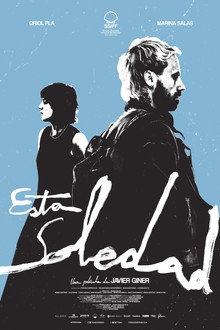
This Solitude
Leo and Lorea have loved one another. Maybe they still do. But something in them has broken. After five years, their relationship is done. He looks after his sick father, trapped between responsibility and an emotional void that weighs him down. She, caught up in poorly-paid jobs and personal crises, tries to get her life back on track without really knowing where to begin. They are two bodies, tired and alone, pierced by their precarious situation, by unresolved issues, by the emotional legacy of a generation who always seem to come late to everything: to love, to stability, to maturity, to serenity, to personal satisfaction.

Twin Murders: The Silence of the White City
Vitoria-Gasteiz, Basque Country, Spain, 2019. Two corpses appear in the crypt of the Old Cathedral. Police officer Unai López de Ayala, an expert in criminal profiling, must hunt down the ritual murderer who has been terrorizing the city for two decades.

VHS

Alaba zintzoa
The story of Susana, a young woman who works as a house cleaner. Susana's life is anything but easy; on the contrary, it is full of problems. The constant work and complications that Susana has to face almost daily mean that she urgently needs a break. So when she sees that her employers' house is empty because they have gone on vacation, Susana sees her chance: she moves in for a while to enjoy the luxuries of the rich, so far removed from her daily life.

20,000 Species of Bees
Lucía is an eight-year-old girl, who sometimes struggles as the world tries to catch up with the fact that she is trans. As the summer holidays pass, she explores her femininity alongside the women of her family who at the same time reflect on their own femininity.

Good Night, Said Miss Bird
Sonia’s life was perfect at first. Her theatre career is improving and Óscar the man who is having an affair with her promises her to leave his wife for her soon. But suddenly her life descends into a downward spiral of terror when she receives photos of them two being together. This is the trademark of a serial killer who already has killed four women and now Sonia is the next target.

The Pedal Push Car
During Holy Week of 59 in the tragicomic social landscape of Franco's Spain, takes place the sentimental chronicle of a nine years old boy: Pablito. Pablito wants the pedal car he sees in a shop near his home. His family -middle class with bad luck - silently suffers the pressure of the other part of the family- middle class with good luck and best influences. The desire of the car and the hope to get it encourage his parents to take the child, piggy bank in hand, through a strange journey to the colorful and surprisingly familiar world full of lies and blackmail. Pablito emotionally survives in that environment thanks to his ability to get from his imagination the answers that parents and teachers do not give him. And that way, Pablito will create his own happy ending.

His Master's Voice
Basque Country, Spain, 1980s. In Bilbao, a gray city dominated by political corruption and nationalist terrorism, Charli works as a chauffeur for Oliveira, a businessman engaged in shady deals. Alarmed by a series of threats and attacks, Oliveira decides to entrust Charli with the protection of his daughter Marta.

Mi Reina
Confined to her bed, an elderly woman believes she is the queen of a medieval war. Her caregiver and a healer guide her between reality and imagination, in a story that blends tenderness, irony, and social critique. The everyday becomes epic as imagination turns fragility into strength.