
Personal Info
Known For
Gender
Birthday
Place of Birth
Mogens Wieth
Known for

The Man Who Knew Too Much
An American doctor and his wife, a former singing star, witness a murder while vacationing in Morocco, and are drawn into a twisting plot of international intrigue when their young son is kidnapped.
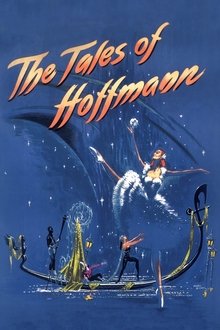
The Tales of Hoffmann
A melancholy poet reflects on three women he loved and lost in the past: a mechanical performing doll, a Venetian courtesan, and the consumptive daughter of a celebrated composer.
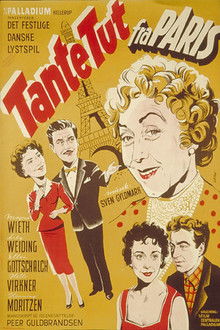
Tante Tut fra Paris
Mogens Wieth is a songwriter who lives beyond his means. He is expecting to inherit a fortune from his Aunt Tut in Paris, who is old and filthy rich. He has been corresponding with her for many years. In reality, Aunt Tut is dead, and it is her daughter who writes the letters. A young singer who wants to ingratiate himself with the songwriter claims that he knows the aunt and that she is coming to Copenhagen. He has persuaded an older actress to play the role of Aunt Tut. Unfortunately, the aunt's charming daughter also arrives in Copenhagen at the same time, setting the stage for costly episodes and amusing complications...
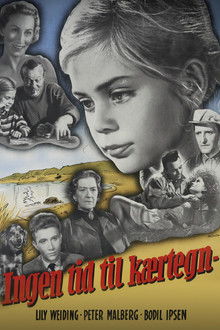
Be Dear to Me
The Danish Ingen tid til Kaertegn (Be Dear to Me) is heavily reliant on the appeal of its star, 8-year-old Eva Cohn. Our heroine is the neglected child of a businessman father and actress mother. Feeling that happiness lies well outside her own backyard, Eva goes on a search for that happiness. The longer she stays away, the more her parents realize that they've unfairly ignored her. The plot is nothing new: it's what is done with it that pleases the eye and ear. Ingen tid til Kaertegn was one of the more popular entries in the 1957 Berlin Film Festival.
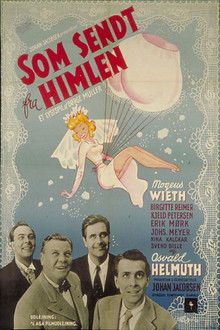
Som sendt fra himlen
The young and beautiful Laura Heiberg is to marry Torsten Vinge. When the priest asks if she will marry him, she says no. She flees from the church and gets a lift from Jonas Møller. He is heading north along the coast. At the 42 km marker in the forest, she asks to be dropped off. She follows a telephone wire to see where it ends. She finds a beautiful house in the forest. It looks uninhabited, but the door is open, so she goes inside. No one responds to her calls. She sends a telegram to an old flame, Herbert Thorsen, asking him to fetch some clothes from home and bring them to her. At the same time, she tells him that she did not get married after all. She finds a book called "What Do You Know About Yourself" written by Allan Krogh. She takes it out onto the terrace to read.
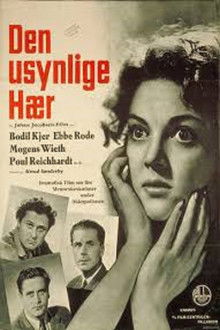
The Invisible Army
Sabotage of a Nazi factory is carried out by the husband of the lover of a resistance leader.
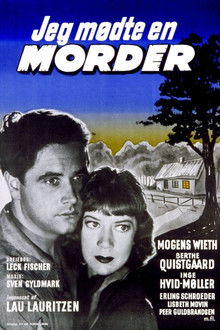
I Met a Murderer
The young successful author Eva Saabye surprises both her publisher William Nerup and the literary critic Dr. Hennings, who is a good friend of hers, by not wanting to publish the last book she has written. One day Eva takes the manuscript for her novel out of the drawer, and as she starts leafing through it, we are drawn into its plot. The book, titled "I Met a Murderer", has Eva Saabye as one of the main characters.
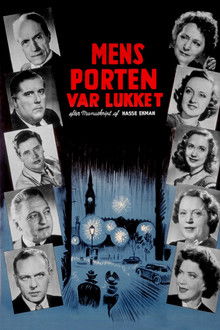
While the Gate was Locked
The film depicts a series of events that take place in a Copenhagen apartment building while the gate is closed, specifically between 10 p.m. and 7 a.m., and we encounter a number of human destinies, happy and unhappy, just as in real life.
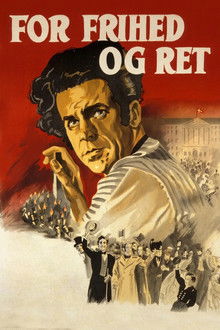
For freedom and justice
A picture of the life of the Danish people from the late 1820s to the introduction of the free constitution in 1849. A fictional character, Rasmus Nielsen, travels around the country, first as a traveling teacher, later in other positions, and through his experiences we are introduced to the conditions of various population groups. The central figure in the portrayal of historical figures is the politician Orla Lehmann.

Mit Liv er Musik
We meet the young violinist Erik Smith in the lap of his family with his wife Lise and his little daughter Lone. Erik is a young, aspiring musician who dreams of one day making a career as an interpreter of the great masters of music. At a concert where a well-known solo violinist has to interrupt, Erik Smith suddenly jumps in and gets his big breakthrough.
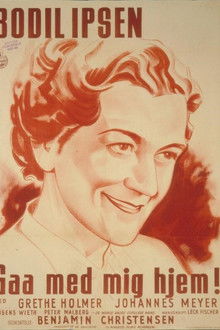
Come Home with Me
Attorney Helene Hannøe forms close relationships with her troubled clients while trying to solve their problems.
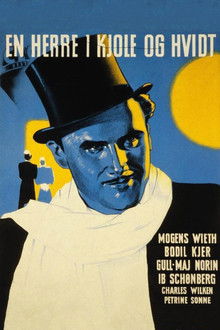
A Gentleman in Top Hat and Tails
In broad daylight, a man runs at full speed across the Town Hall Square wearing a dress and white. People stare in amazement as he tries to grab a seat in a phone box to make a call. However, his story is even more incredible than they can imagine.
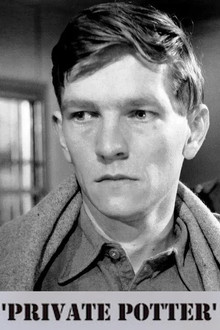
Private Potter
A military mission is interrupted when a British soldier claims that God had appeared to him in a transcendental vision.
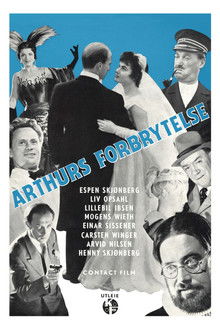
Arthur's Crime
Arthur Sellmann is marrying Irene, and his friend, the spiritual Diana makes him read his future in the palm of his hands every week. Maybe he shouldn't have started believing what he is told.

A Matter of Morals
Alan Kennebeck is unable to accept a brief, realistic romance for what it is. Eventually it leads to his complete moral downfall. Triggered by the factory official Eric Walderman, being a sadistically suave conniver and villain, who babbles a Nietzschean creed of ruthlessness and brings the picture to its grim, melodramatic conclusion.