Personal Info
Known For
Gender
Birthday
Place of Birth
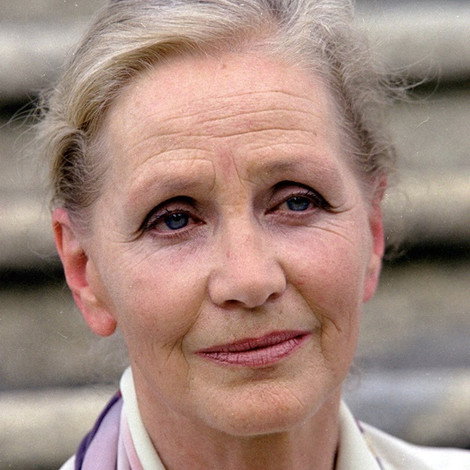
Anna Milewska
Known for

Father Matthew
Father Matthew is about the adventures of a Roman Catholic priest who, after returning from a mission to Belarus, is sent to work in a small parish. As a pastor, together with a friendly policeman, he solves mysteries and gives help to his parishioners, as well as all those who are in need.

Dom
The story of the residents of a tenement house on Złota Street in Warsaw from 1945 to 1980.
Dom
The story of the residents of a tenement house on Złota Street in Warsaw from 1945 to 1980.
Dom
The story of the residents of a tenement house on Złota Street in Warsaw from 1945 to 1980.

Calling 07
The series centres around the investigations of Police Lieutenant Sławomir Borewicz. Each episode features a different case being solved by Borewicz.
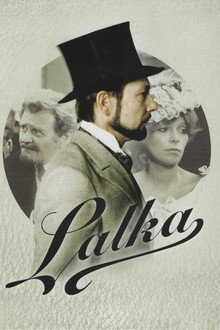
The Doll
The story of Stanisław Wokulski, a wealthy merchant who falls in love with a haughty aristocrat, Izabela Łęcka. Causing a misalliance in the late nineteenth century Warsaw. Young Wokulski is forced to work as a waiter, while dreaming of a life in science. After taking part in the failed uprising, he is sentenced to exile in Siberia. Upon return to Warsaw, he becomes a salesman. Marrying the late shop owner's widow, he becomes rich, He uses his money set up a partnership with a Russian merchant, met in the exile. The two makes a fortune supplying the Russian army. Wokulski falls in love with Izabela, daughter of the bankrupt aristocrat. In his quest to win her, he ventures theatres and aristocratic salons. To help her financially distressed father, he founds a company with the aristocrats as shareholders. Wokulski ability to make money is respected, but his lack of social rank is often brought. Izabela eventually accepts his affection, but without true devotion or love.

Theatre Macabre
Horror legend Christopher Lee hosts this anthology in the tradition of Alfred Hitchcock Presents, each half-hour episode adapting a story from a classic author, with tales by Edgar Allen Poe, Fyodor Dostoevsky, Ambrose Bierce, Robert Louis Stevenson, and Oscar Wilde.

Dyrektorzy
1957. Excessively high production standards imposed by the authorities result in the plan not being fulfilled, and the workers cannot imagine living normally without rewards and bonuses. A rebellion breaks out. Worker democracy wins – the working class elects a director from among its own ranks. He is an old locksmith with no managerial experience. Although he believes in the socialist spirit and has a communist past, he does not hold the position for long, as he makes promises too easily that he is unable to keep.

Blisko, coraz bliżej
The story stretches from 1863 to 1945. Its main characters are representatives of the Pasternik family, who live in the fictional village of Wielowice near Pszczyna. The protagonist of the first three episodes is Franciszek Pasternik, the following parts tell about the fate of his many children and even more grandchildren. The viewer follows their history against the backdrop of great changes and historical events that influenced the lives of Silesian Poles. So there is the Kulturkampf, Prussian rugi, the revolution of 1905, World War I and the Silesian Uprisings.

Yes, Yes
Set in Poland in the 1970s, the main character half-heartedly goes about his job as a censor at the state run television station, whilst conducting affairs with nurses, airline pilots, etc. Interesting scene where main character must illegally emigrate to his own country.

Trzy młyny
Series based on the stories of Jarosław Iwaszkiewicz “Młyn nad Utrata” (1936), “Młyn nad Lutyniu” (1946) and “Młyn nad Kamienna” (1950). The action of the miniseries takes place from 1928 to the 1950s.

Tulipan


An Uneventful Story
A well-known professor of medicine finding himself at the threshold of autumn of his life, takes stock of his achievements and experiences. "In the end it ends with what has been known for a long time: that conscious life without a fixed worldview is not life, but torment, horror. - wrote Anton Chekhov in one of his letters summarizing "An Uninteresting Story". The protagonist, Professor Nikolai Stepanovich, is a character characteristic of Chekhov's entire oeuvre - a Russian intellectual from the late nineteenth century, depressed by boredom and a sense of his own uselessness and the meaninglessness of his existence.

Zakręt
A psychological study of a successful man, completely devoted to his professional work, for whom the first vacation in years becomes an opportunity to reflect on the illusory value of civilizational progress, opposed to the purity and harmony of the natural world, and to compare his own life with the model of others. Stefan is in charge of the construction of a large investment. He fears imminent old age. He visits a friend who lives in a mountain solitude. They witness a tragic accident - a young mountaineer falls off a cliff. They bring help. Stefan notices the emptiness of his family life. His wife wants to leave him, he still believes in the possibility of saving their marriage. During a trip together they get into a car accident. An encounter with Stefan's son, Andrew, occurs, forcing him to make a harsh assessment of his life.