
Personal Info
Known For
Gender
Birthday
Place of Birth
Santiago Pedrero
Known for

Endless Summer
Verano del '98 is an Argentine telenovela, produced by Cris Morena. It was broadcast on Telefe television in the period January 12, 1998-November 17, 2000. The telenovela had three seasons, and changed its cast many times. Cris Morena also composed songs for Verano del '98 soundtrack.

Claudia
Claudia is a workaholic event planner. When a colleague asks her to plan her wedding, she starts to notice a lot of issues with the ceremony and changes it's location on the last minute, unfolding on a series of unfortunate events.
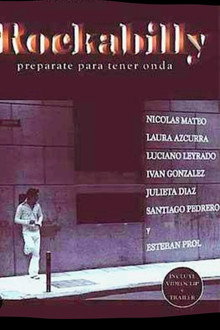
Rockabilly
A young man wants to make a girl fall in love with him and on the way he discovers that what he wanted was something else...

Swim Alone
The film does not describe, rather it observes, in a distant manner, the world of Martin, a seventeen year old who feels he doesn’t belong anywhere, not at home, school, nor with his friends or members of his rock band. In search of some happiness, Martin takes off to the coastal town of Mar de Plata, where his older brother lives. Unglamorous, yet enchantingly addictive and refreshingly genuine, Acuña paints a confused and uncomfortable world, and makes us want revisit it over and over again.

Las 13 esposas de Wilson Fernández
Inside the enigmatic Club Brillanté, the pianist Wilson Fernández recounts the love affairs with his 13 wives while events full of violence and criminality unfold.

La migración
Guillermo Lucena, rock musician outside the market, travels from Argentina to Lima looking for a friend who disappeared some time ago. After following some anonymous clues, he meets Sofia, a restless teenager with whom he will befriend. The two will find in this bond a way to make sense of the absences they happened to live.

Variaciones Walsh
In each episode, which takes place independently of each other, commissioners Jiménez (Luis Luque) and Laurenzi (Darío Grandinetti) must solve different police cases that will be presented to them and will be a challenge for them, for which they will receive the help of the editor literary Daniel Hernández (Nicolás Cabré) who is looking to write a book about crimes.

Luego
Three situations of vaguely theatrical origin, stripped of all outer clothing, reveal the track of a different cinema. whose realism seeps into the cracks of his apparently self-contained, closed world.

Cheese Head
It tells the story of four Jewish boys during a few summer days at the country club where their parents take them, on the outskirts of Buenos Aires, in 1993. Within the club, the four define themselves as outsiders, since they do not participate in the sports activities that are practiced there, and therefore do not fit into the logic that governs the place, being permanently bothered and mocked by the rest of the children of their age.

Recurrence
Years after moving to a remote town, ex-cop Pipa is pulled back into the dark world she thought she'd left behind when a corpse appears on her property.

Bendita vida

3
Dissatisfied with his new life (and wife), a man tries to insinuate himself back into the home of the ex-wife and daughter he left ten years before.

Alanis
A young Buenos Aires mother finds employment as a sex worker and struggles to live under the same laws that are supposed to protect her.

Visitante de invierno
This is the story of Ariel Lambert, a twenty year old, who is advised to rest in a quiet place after a psychiatric episode. He moves together with his mother and sister to Villa Mar, small seaside resort, which is practically deserted at that time of the year. Slowly, Ariel discovers that children go into a house nearby, (which is supposed to be derelict) and they never come out again. Is this happening for real? Or is it only a figment of Ariel's sick mind? There will be only one way to find out: Ariel will have to go into the house himself

Vacaciones en la Tierra
Martín Sala (Nicolás Mateo), now returns to work in a radio together with his cousin, Diego (Luciano Leyrado), and Lando Carrizo (Diego Gentile), a radio producer. The station is in need of a change and Lando comes up with a contest that has as a prize a transmission of the program from where he designates the winner.