Personal Info
Known For
Gender
Birthday
Place of Birth
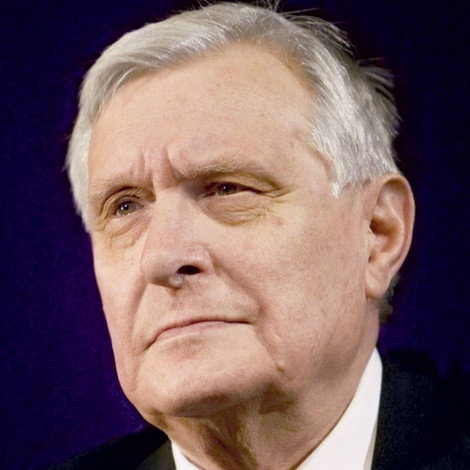
Oleg Basilashvili
Known for

To Remember

Gangster's Petersburg
A Russian detective series, based on 8 works of Andrei Konstantinov ("lawyer", "Justice / Attorney-2", "The Thief / Journalist-2", "Writer", "Inventor / Writer-2", "The prisoner "," Cop "," Scavenger ") and four works by other writers.


The Idiot
The Idiot (Идиот) is a 2003 Russian costume drama television serial written by Vladimir Bortko, adapted from Fyodor Dostoevsky's 1869 novel of the same title. In corrupt 19th-century St Petersburg, Christ-like Prince Myshkin becomes entangled in the lives of the self-destructive Nastasya Filippovna and the romantic Aglaya Epanchina.

The Master and Margarita
The Master and Margarita is a Russian television production of Telekanal Rossiya, based on the novel The Master and Margarita, written by Soviet writer Mikhail Bulgakov between 1928 and 1940. Vladimir Bortko directed this adaptation and was also its screenwriter.

Eternal Call
A saga about the life of the Siberian Savelyev family during the period 1902 through the 1960s as they survive through three wars, a revolution, and Soviet government approval.
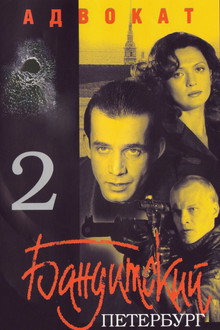
Banditskiy Peterburg: Advokat
Detective Sergei Chelishchev leaves the police to find the real murderer of his parents. Everything changes when he meets his long-lost friend, a war veteran who joined local mafia following the fall of the Soviet Union.

Confrontation
Operatives are looking for a killer who has appropriated someone else's identity. The story of a real case based on the story of Yulian Semyonov.

Palm Sunday
1970s. Artur Nikitin, the grandson of a Politburo member, a spoiled guy who knows no denial in anything, falls in love with a young talented ballerina, Oksana Lepina. Arthur tries to seduce the girl with expensive gifts, but Oksana keeps her distance. Then he sexually assaults the girl. Oksana writes a statement to the prosecutor's office, not afraid of either investigative threats, or the influence of the rapist, or the loss of her own reputation.

Oblomov
St. Petersburg, mid 19th century: the indolent, middle-aged Oblomov lives in a flat with his older servant, Zakhar. He sleeps much of the day, dreaming of his childhood on his parents' estate. His boyhood companion, Stoltz, now an energetic and successful businessman, adds Oblomov to his circle whenever he's in the city, and Oblomov's life changes when Stoltz introduces him to Olga, lovely and cultured. When Stoltz leaves for several months, Oblomov takes a country house near Olga's, and she determines to change him: to turn him into a man of society, action, and culture. Soon, Olga and Oblomov are in love; but where, in the triangle, does that leave Stoltz?

Dead Souls
In "Dead Souls" Gogol posed the most pressing and painful questions of modern life. The very title of the poem had enormous revealing power; it carried, according to Herzen, “something terrifying”, “he could not name it otherwise; not the revisionists - dead souls, but all these Nozdryovs. Manilovs and all those like them are dead souls, and we meet them at every step..."

Press Center

Azazel
The main character, an official of the 14th grade, Erast Petrovich Fandorin, serves as a clerk in the Detective Department and secretly dreams of becoming a detective. By the will of circumstances, he finds himself involved in the investigation of a mysterious suicide.

A Slave of Love
During the Russian Civil War, the production of a silent melodrama runs into numerous complications.

End of the World with Symposium to Follow
Millionaire commissions a play addressing the threat of nuclear war.