Personal Info
Known For
Gender
Birthday
Place of Birth
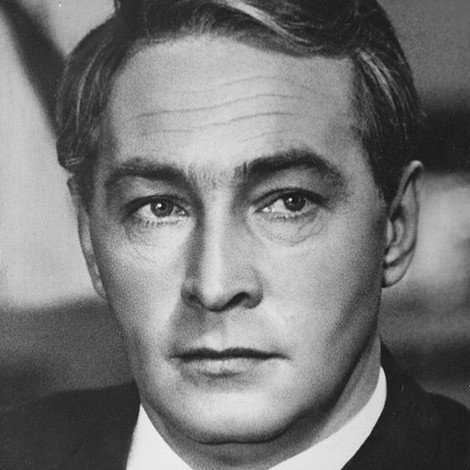
Vyacheslav Tikhonov
Biography
Known for

Seventeen Moments of Spring
A Soviet spy is tasked with disrupting the negotiations between Karl Wolff and Allen Dulles taking place in Switzerland, aimed at forging a separate peace between Germany and the Western Allies.

Legends of Cinema

The Waiting Room
A 'runaway' homeless man, once a renowned athlete, finds himself marooned in the small, snow-covered town of Zarechensk. Victor lands a job at an orphanage, where he soon meets a young teacher who becomes both a compassionate friend and the love of his life. However, fate doesn't play out simply as good or bad; it unfolds in a way that makes the hero realize one cannot run away from oneself. Consequently, it is in Zarechensk that a train carrying a film crew from the capital, on their way back to Moscow, is compelled to delay their journey for a few days. Remarkably, Zarechensk becomes the place where a director finally discovers the perfect actress for his leading role and encounters a man who has fled from her love. Meanwhile, a producer makes the ultimate decision to select this town as the filming location for her upcoming movie.

TASS Is Authorized to Declare...
The struggle of Soviet and American intelligence agencies during the Cold War era

War and Peace
The love story of young Countess Natasha Rostova and Count Pierre Bezukhov is interwoven with the Great Patriotic War of 1812 against Napoleon's invading army.

Burnt by the Sun
Russia, 1936: revolutionary hero Colonel Kotov is spending an idyllic summer in his dacha with his young wife and six-year-old daughter Nadia and other assorted family and friends. Things change dramatically with the unheralded arrival of Cousin Dmitri from Moscow, who charms the women and little Nadia with his games and pianistic bravura. But Kotov isn't fooled: this is the time of Stalin's repression, with telephone calls in the middle of the night spelling doom - and he knows that Dmitri isn't paying a social call...

Battle of Moscow
The Battle of Moscow is a 1985 Soviet multi-part war narrative, presenting a dramatized account of the 1941 Battle of Moscow and the events preceding it. The battle was the first major defeat of German Wehrmacht in the Second World War.

War and Peace, Part II: Natasha Rostova
As 1809 nears its end, Natasha attends her first ball, where Andrei falls in love with her with the intent of marriage. However, as her father demands they wait, the prince travels abroad, leaving Natasha in desperate longing. But she meets Anatol Kuragin and forgets Andrei. Part two of the four-part adaptation of Leo Tolstoy's 1869 novel.

War and Peace, Part I: Andrei Bolkonsky
In 1805 St. Petersburg, Pierre Bezukhov, illegitimate son of a rich nobleman, is introduced to high society. His friend, Prince Andrei Bolkonsky, joins the Imperial Russian Army as aide-de-camp of General Mikhail Kutuzov in the War of the Third Coalition against General Napoleon Bonaparte. Part one of the four-part adaptation of Leo Tolstoy's 1869 novel.

They Fought for Their Motherland
In July 1942, in the Second World War, the rearguard of the Russian army protects the bridgehead of the Don River against the German army while the retreating Russian troops cross the bridge. While they move back to the Russian territory through the countryside, the soldiers show their companionship, sentiments, fears and heroism to defend their motherland.

The Incomparable
Anastasia Dmitrievna Vyaltseva, who performed on the opera stage, was called "incomparable" during her lifetime. Obsessed with the desire to sing, the young provincial woman arrived in St. Petersburg, joined the troupe of the musical theater of the entrepreneur Arkady Palma, married the patron of the arts Nikolai Kholev, and soon gave her first concerts. The first success, the first triumphant tour of Russia and the first losses. Her husband dies, the Russo-Japanese war begins, she goes to the front and will do everything that is the responsibility of a sister of mercy.
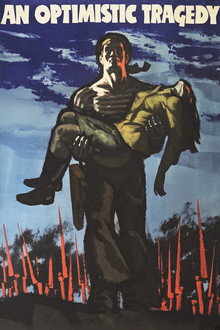
An Optimistic Tragedy
1918 year. A woman commissar has been appointed from the Central Committee of the Bolshevik Party to the Russian warship Gromoboi, which is ruled by anarchist sailors. The leader of the ship is the anarchist Vozhak. The Commissioner was instructed to reorganize the naval detachment into the First Sailor Regiment. She faces a difficult task: to win the authority of the sailors and eradicate anarchy. Of the remaining officers on the ship — lieutenant Bering, who served in the tsarist fleet on the battleship "Emperor Paul I". He must become the commander and, together with the sent commissar, lead the regiment to the front in the Black Sea region.
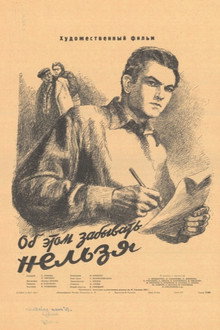
It Can Not Be Forgotten
The story unfolds in a post-war town in Western Ukraine. The enemy agents are trying to subvert communist writer Aleksandr Garmash using ideological diversions. In parallel, a story is told about student Rostislav Danchenko who is being recruited by enemy agents. The story is pertinent due to resurgence of ultra-nationalist underground activity in Western Ukraine after World War II.

War and Peace, Part III: The Year 1812
In 1812, as Napoleon's army invades Russia, Kutuzov asks Bolkonsky to join him as a staff officer, yet the prince requests a command in the field. Pierre sets out to watch the armies' impending confrontation. As the Battle of Borodino rages, he volunteers to assist in an artillery battery. Part three of the four-part adaptation of Leo Tolstoy's 1869 novel.

White Bim Black Ear
White Bim Black Ear (Russian: Белый Бим Чёрное ухо, translit. Belyy Bim, Chyornoe ukho) is a 1977 Soviet drama in two parts directed by Stanislav Rostotsky. It is based upon the book of the same name, written by Gavriil Troyepolsky and is about a white Gordon Setter with a black ear who becomes homeless because of his master's illness.