Personal Info
Known For
Gender
Birthday
Place of Birth
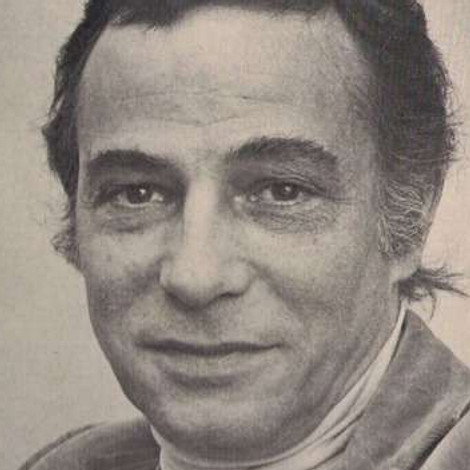
Jean Négroni
Biography
Known for

Spartakus and the Sun Beneath the Sea
The Arkadians are a civilization that survived a great cataclysm and moved to the center of the earth, thriving under the power of their artificial sun, The Tehra, until one day it began to fail. In desperation, the Arkadians broke the ancient law and entered the Forbidden Archives to search for an answer. They used their special powers and created a messenger to the people above, naming her Arkana. She meets up with Matt and Rebecca, two ordinary kids from the surface world, Bic and Bac, two strange anteaters from Arkadia, and Spartakus, a mysterious warrior. Together they search the worlds of the strata for a way to save a people and possibly the world.

Hunter Will Get You
L'Alpagueur is a free-lance spy from the French secret agency. He's put on the investigation about L'epervier, a serial-killer who employs young boys to help him robbing banks before killing them.

Blake and Mortimer
Blake and Mortimer is an animated television series, based on the Blake and Mortimer comic book by Edgar Pierre Jacobs. The series was directed by Stéphane Bernasconi, and produced by Ellipse, and shown in 1997. The first nine stories were used in this series, as well as four brand new stories, devised by the creators: The Viking's Bequest, The Secret of Easter Island, The Alchemist's Will, and The Druid. New writers, mostly connected to the production company as writers, dialogists or translators, were asked to come up with original plotlines which used the characters of Jacobs' stories, respected the magical/scientific Universe, but rang interesting changes.

Rahan, fils des ages farouches

Gramps Is in the Resistance
It is 1943 in Paris. Like so many others, the Bourbelle family's home has been taken over by the Germans and they now live in their cellar. Little do they know that the son, Guy-Hubert Bourdelle, is far from being the cowardly hairdresser he pretends. He is in truth the Germans’ most feared opponent: le super-résistant!

Évariste Galois
Galois is practicing shooting in preparation for a duel the very next day. His last night.

La Jetée
A man confronts his past during an experiment that attempts to find a solution to the problems of a post-apocalyptic world caused by a world war.

Bel-Ami

God Chose Paris
An interesting mixture of filmed scenes with Belmondo and archival footage regarding cultural aspects of all kind around Paris, starting at the end of the 19th century and ending in the mid-1960's. Jean-Paul Belmondo leads us through the movie starting as a young photographer around 1900, a reporter in both world-wars and doing fictional interviews with lots of celebrities.

A Certain Mr. Jo
Jo Guardini, now the peaceful owner of a charming inn by the banks of the River Marne, once was a dreaded gangster. The respectful citizen does not want to have anything to do with the underworld any more. Unfortunately, two of his former accomplices kidnap a little girl and decide to hide her in his hotel. What will Jo do : side with the law in the person of inspector Loriot or have a relapse in crime?

La terreur et la vertu - Première partie: Danton
From November 1793 to April 1794, in order to reinforce the power of the Revolution, Robespierre strikes right and left. He successively sends the Hébertists to the guillotine, followed by Danton, the chief of the Indulgents, and Camille Desmoulins, who asked the new regime for clemency in his journal, Le Vieux Cordelier. Robespierre triumphs, but he is alone...

Le Sourire
In the year that Cannes Film Festival handed out awards to Federico Fellini for La Dolce Vita, L'Avventura by Michelangelo Antonioni, and Kagi by Kon Ichikawa -- 'Le Sourire' won the Palme d'Or for Best Short Film in 1960. This quiet and intelligent film is a remarkable interpretation of a young monks perspective into a world of meditation, sacred geometry, and coming of age. A tribute to Buddhism, introspection and the wonders of nature...a short but lasting work of art.

The Queen of Spades
A gambling countess comes by a secret three card combination that wins her a fortune, but she is allowed to use it only once and not gamble again. She passes on the info twice, and the recipients both die violently. She is warned that if she passes it on again, she too will die. Many years later, a young soldier discovers that the countess has the secret, and he resolves to get it out of her.
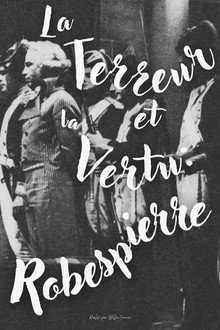
Terror and Virtue: Robespierre
From April to July 1794, Robespierre forms a triumvirate with Saint-Just and Couthon. He plans to instate his ideal based on virtue and in times of revolutionary crisis, on terror. In May, he establishes the Cult of the Supreme Being. However, he still has numerous enemies...

Illuminations
Light is everywhere. Sunlight illuminates the beauty of solitary landscapes. Twilight, on the other hand, illuminates New York City, a city both swarming with people and spectral. This is a mysterious spectacle, enhanced by Rimbaud's poetry and Michel Legrand's music.